Fjaka is a Dalmatian way of life that’s often described as “the art of doing nothing,” but after spending time in Split, I realized that translation doesn’t really do it justice. It’s less about doing nothing and more about being completely content with the moment you’re already in.
…and for the first few days, I genuinely thought everyone in Split just had nowhere to be. And then i learned about Fjaka. And when I started asking what is fjaka and why it seemed to be everywhere in Dalmatian life, I realized I might have been watching people who understood the value of time better than I did.
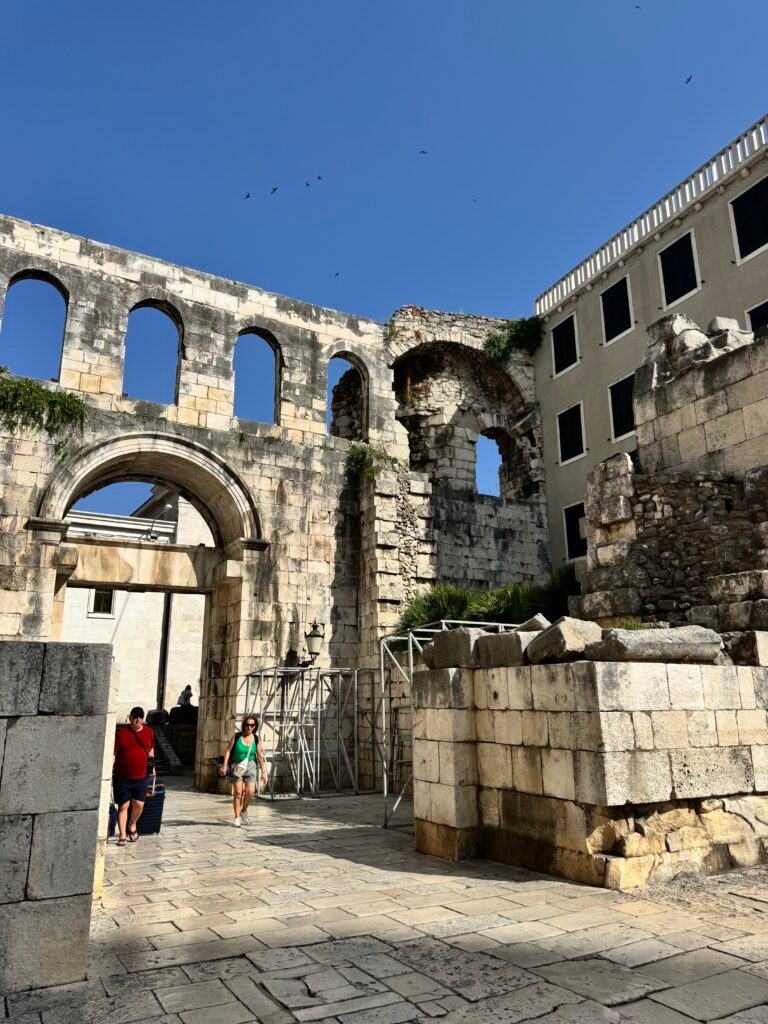
People walked slowly. Coffee lasted forever. Nobody seemed particularly concerned with getting somewhere five minutes faster.
And they carried themselves with this quiet confidence that made me think dang, all these people must be incredibly successful.
Everything is handled. Bills paid. Inbox empty. Absolutely nowhere to be.
Meanwhile, I grew up in the United States, where hustle culture is large and in charge. Being busy means you’re important. Where a totally acceptable reply to “How are you” is “busy” and where being exhausted means you’re working hard. And doing absolutely nothing?
Well, that’s lazy.
At least that’s what my little American brain had been trained to believe.
Then I learned about fjaka. And I realized I might have been watching people who understood the value of time much better than I did.
So, What Does Fjaka Actually Mean?
Fjaka, roughly pronounced fyah-kah, is a Dalmatian concept often translated as “the art of doing nothing.”
But that doesn’t quite explain it and it’s one of those words that does not translate neatly to English. It’s not boredom, procrastination or laziness. Fjaka is more like being completely content with the moment you’re already in.
Sitting in the shade. Drinking a coffee long after the coffee is gone. Talking with friends. Watching the sea. Having nowhere particularly important to be and, most importantly, not feeling guilty about it.
Why Fjaka Is More Than “Doing Nothing”
This distinction was hard for me. Doing nothing sounds negative. You WASTED an afternoon.
You SHOULD have accomplished something. Fjaka doesn’t feel like wasting time.
It feels like not needing every minute of your life to produce something.
And I don’t think I realized those were two different things until I saw it.
Where Did the Word Fjaka Come From?
Although you’ll often hear fjaka described as Croatian, it’s more specifically associated with Dalmatia, Croatia’s Adriatic coastal region.
The word is generally connected to the Italian fiacca, associated with weariness, sluggishness or a lack of energy.
That Italian connection makes sense. Centuries of cultural exchange and Venetian influence along the Dalmatian coast left their mark on everything from architecture and food to local language.
Over time, however, fjaka developed into something distinctly Dalmatian, not simply tiredness, but an almost pleasurable state of slowing down.
At First, Fjaka Looked Like Laziness to Me
I think this is worth admitting because it’s very easy to travel somewhere, learn about another culture and later pretend you understood it all along.
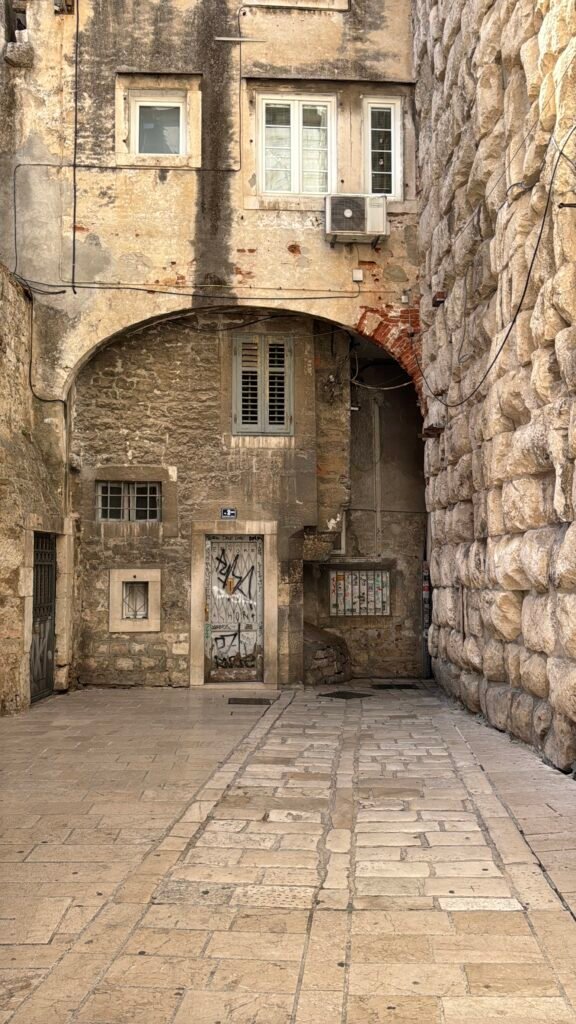
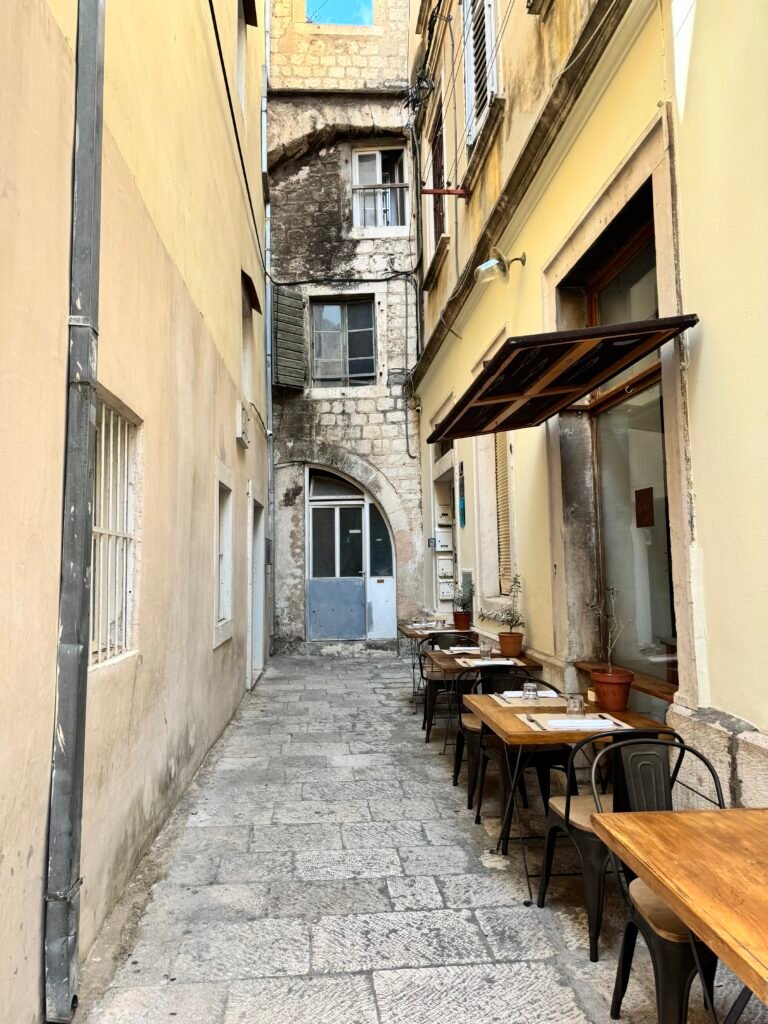
I didn’t. People sitting around for hours in the middle of the day? Don’t you have something to do? An hour-long coffee?
What are we still doing here? Walking incredibly slowly when you could simply walk faster?
Please move.
But that’s because I was interpreting their lives through the culture that raised me.
Growing Up With American Hustle Culture
In America, we don’t even let relaxation relax. We “recharge.” We practice “self-care.”
We optimize our mornings, track our sleep and listen to podcasts while walking because walking isn’t accomplishing enough…duh..
And then we go on vacation.
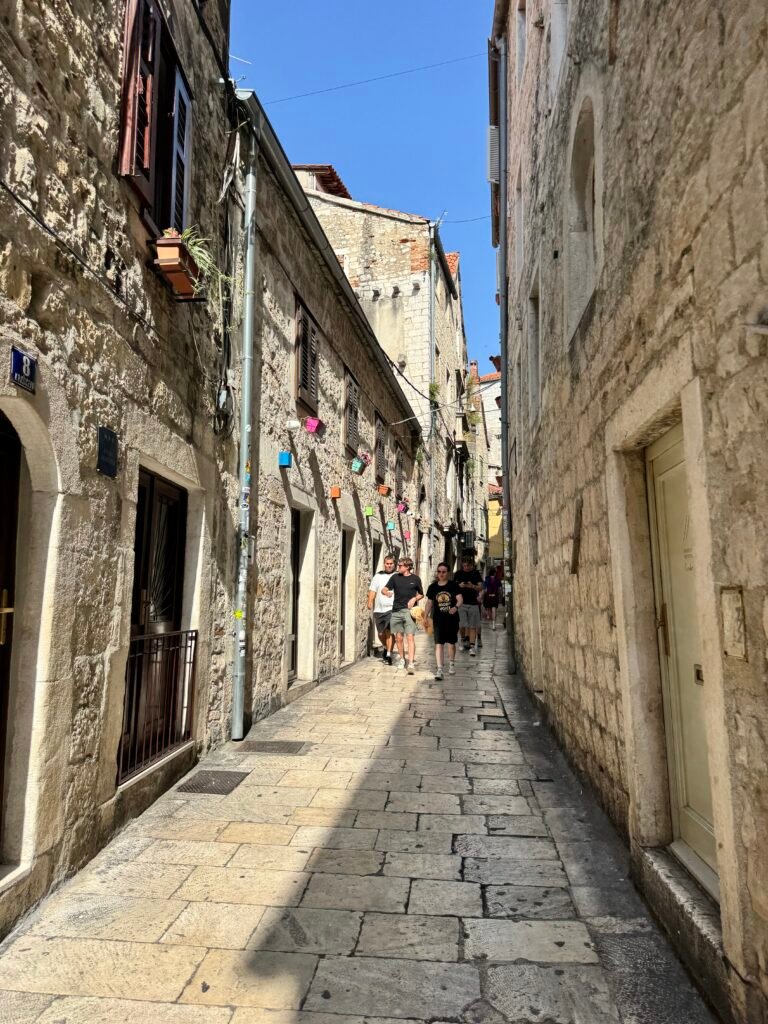
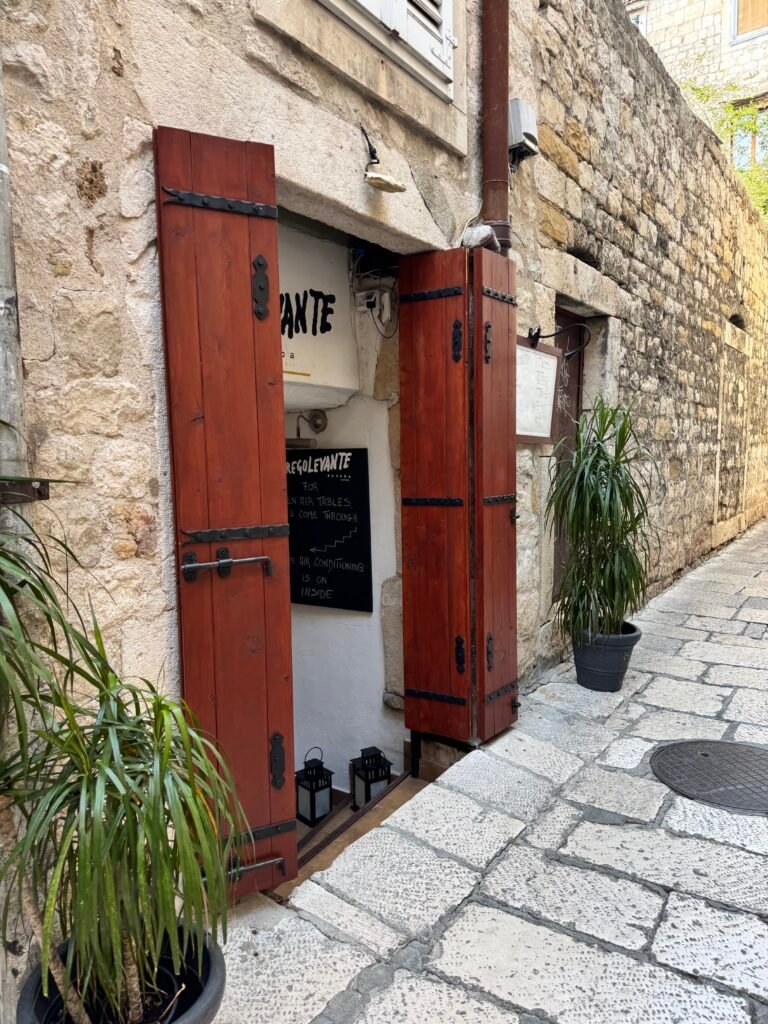
Breakfast at 7:00. Walking tour at 9:00. Museum at 11:30. Lunch at 1:00. Another attraction. Sunset viewpoint. Dinner.
WE DID NOT COME ALL THIS WAY TO SIT AROUND.
Then we get home exhausted and announce that we need a vacation from our vacation. I’ve done it. I literally plan travel for a living. Maybe that’s why fjaka felt so foreign to me.
Then I Started Watching People in Split
Fjaka sounds a little ridiculous when you reduce it to “doing nothing.”
You need to witness it. I watched people sit together without any urgency to end the conversation. I watched people stroll along the Riva instead of marching down it. I watched coffees last far longer than I considered reasonable for the amount of liquid involved.
And there was something I hadn’t expected.
Joy.
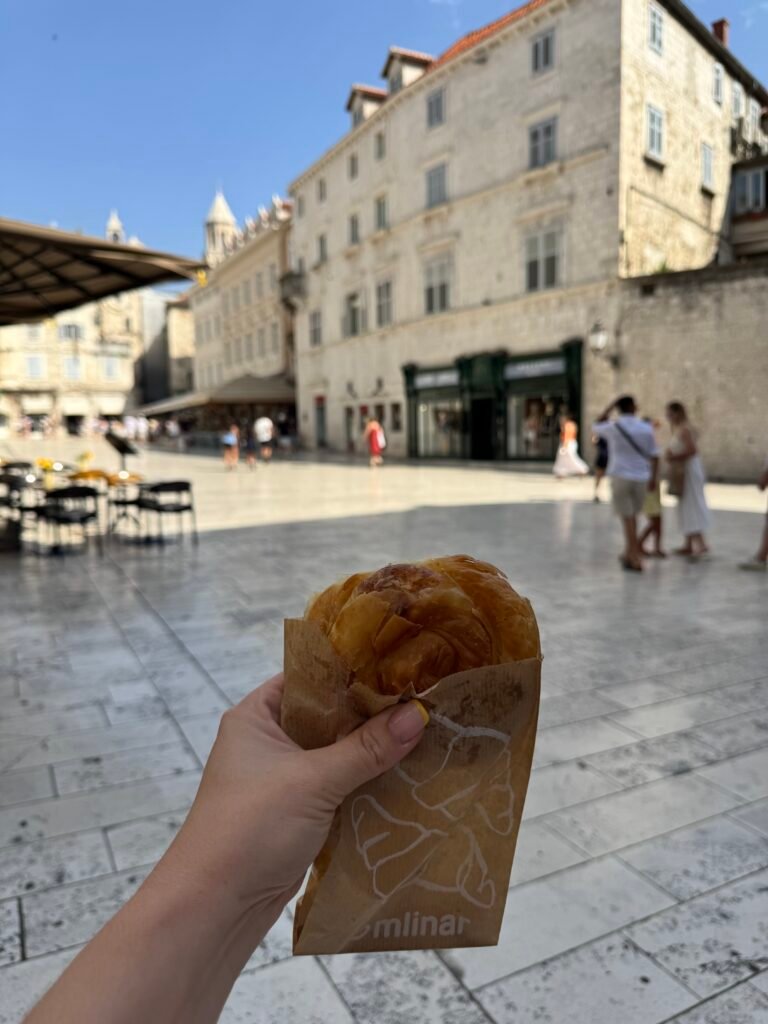
Nobody looked miserable about “wasting” time. They looked like they were enjoying their lives. And suddenly I started questioning the words I was using.
If you spend an hour drinking coffee with someone you love and enjoy every minute of it, what exactly did you waste?
If you sit beside the Adriatic Sea for an afternoon and accomplish absolutely nothing but go home happy, was the afternoon unsuccessful?
Maybe they weren’t lazy. Maybe they weren’t wildly successful either. Maybe they were just…living.
And… I truly think the rest of the world should start taking notes…
Maybe My Definition of Success Was the Culture Shock
This is one of my favorite things about travel. Eventually, something you’ve believed your entire life gets challenged and you realize…
Oh.
That’s not how life works.
That’s just how WE do life.

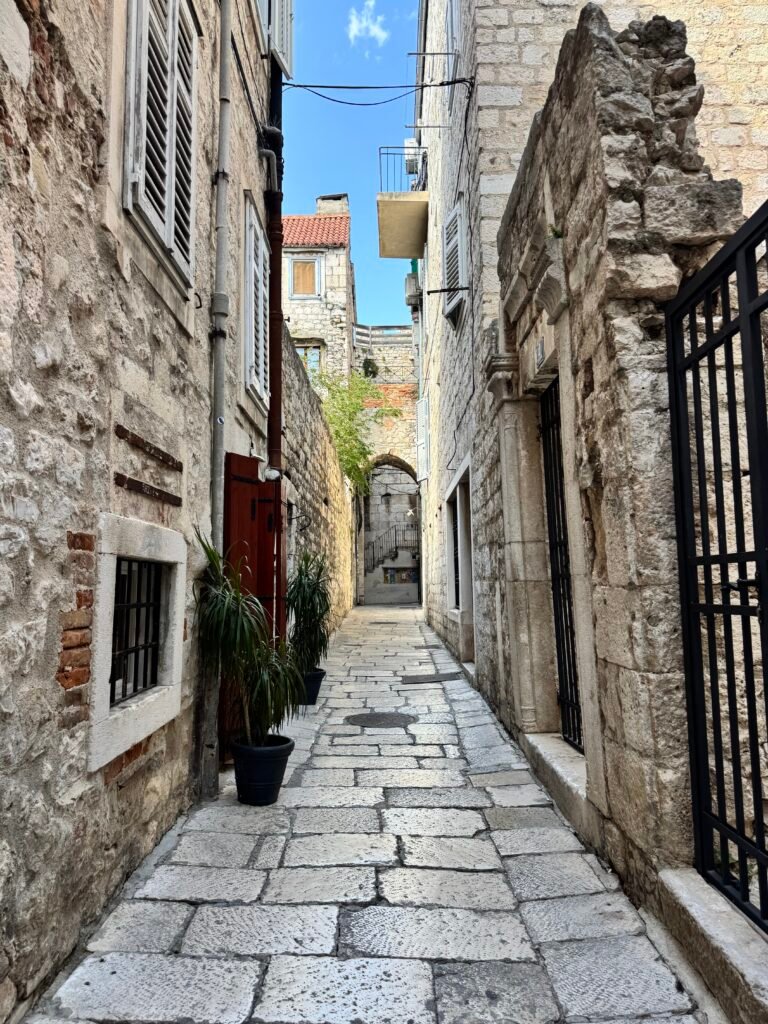
Before I started traveling, I understood that other countries had different food, languages and traditions. What I didn’t understand was that people could have completely different relationships with work, time, rest and success.
Those differences are far more interesting to me now.
Fjaka existed so far outside the mentality I grew up with that I’m not sure I knew this kind of relationship with time was even an option.
I had to see it. More importantly, I had to see the joy in it.
Want to Experience Fjaka in Split?
Planning a trip through Croatia? I’m a professional travel planner, and Croatia is one of those places where I think leaving a little room between the plans matters just as much as what you put on the itinerary. If you’d rather have someone else figure out the logistics, I can help plan your trip. CLICK HERE to get started!
You can’t exactly put 2:00 PM – Authentic Fjaka Experience on your Croatia itinerary. That would probably defeat the purpose. But Split is a wonderful place to leave some empty space.
Walk. Get lost. Sit somewhere longer than necessary. Have the coffee. Watch people.
I’ve created a Self-Guided Walking Tour of Split that takes you through the city’s major historical sights without needing a guide. Follow it, but don’t race through it. Some of my favorite parts of Split happened between the actual stops and sights I set out to see.
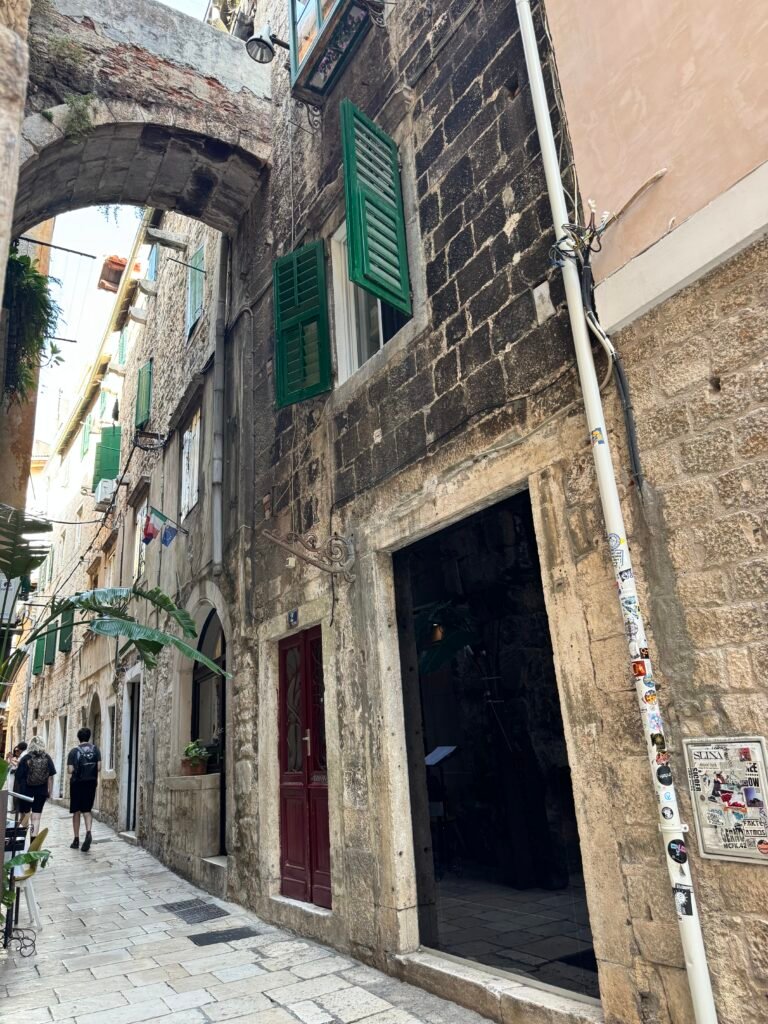
And if you’re planning a longer stay, you can read my Complete Split Travel Guide and Review for where I stayed, what I did, day trips and everything I think you should know before visiting.
And Maybe That’s What Fjaka Was Trying to Teach Me
I wish I could say I came home completely transformed.
I did not. I still make lists. I still answer emails when I don’t need to. I still walk too fast.
My American brain did not magically become Dalmatian because I spent time in Split.
But now I notice it. Before I started traveling, I think I believed slowing down came later.
Work hard. Build something. Make money. Become successful. And eventually, once everything is handled, you get to relax.
Except everything is never handled. There will always be another email. Another bill. Another load of laundry. Another thing you could be doing.
Maybe fjaka isn’t really about doing nothing. Maybe it’s understanding that not every moment needs to accomplish something.
I still don’t think my American brain fully understands it. But I saw the joy in it. And maybe that’s enough.
Maybe those people weren’t lazy. Maybe they didn’t have everything figured out. Maybe there was simply nowhere more important to be than exactly where they already were and I think that is a beautiful beautiful thing.