This Oktoberfest for first timers guide is everything I wish more people understood before they go. Oktoberfest is one of those things that almost feels larger than reality before you experience it yourself.
- Is Oktoberfest Actually Worth It?
- The Biggest Mistakes First-Timers Make at Oktoberfest
- Not Bringing Enough Cash
- Waiting Too Long to Plan
- Thinking You Need Tickets to Enter Oktoberfest
- Not Understanding How Tent Reservations Actually Work
- Trying to Overdo It
- Where to Stay for Oktoberfest
- Best Hotels Within Walking Distance of Oktoberfest
- Best Hotels One Easy Train Ride Away
- Is It Worth Staying Walking Distance?
- How Many Days You Actually Need
- How Beer Tent Reservations Really Work
- What Nobody Tells You About Oktoberfest
- Oktoberfest Is Physically Exhausting
- The Beer Is Stronger Than People Realize
- You Will Probably Sit With Strangers
- The Bathrooms Become Part of the Experience
- You Don’t Have to Wear Traditional Clothing… But You’ll Probably Want To
- The Earlier You Go, the Better the Experience Usually Is
- Oktoberfest Is Surprisingly Emotional
- Oktoberfest for First Timers: Tips That Will Save You Stress
- Planning Your Germany Trip Beyond Oktoberfest
You see the photos first. Giant beer tents. People standing on benches singing songs in a language you don’t know. Women in dirndls carrying impossible amounts of beer. Massive pretzels bigger than your head. And along the way, Oktoberfest starts feeling less like a real place and more like this exaggerated travel spectacle everyone eventually ends up seeing on social media.
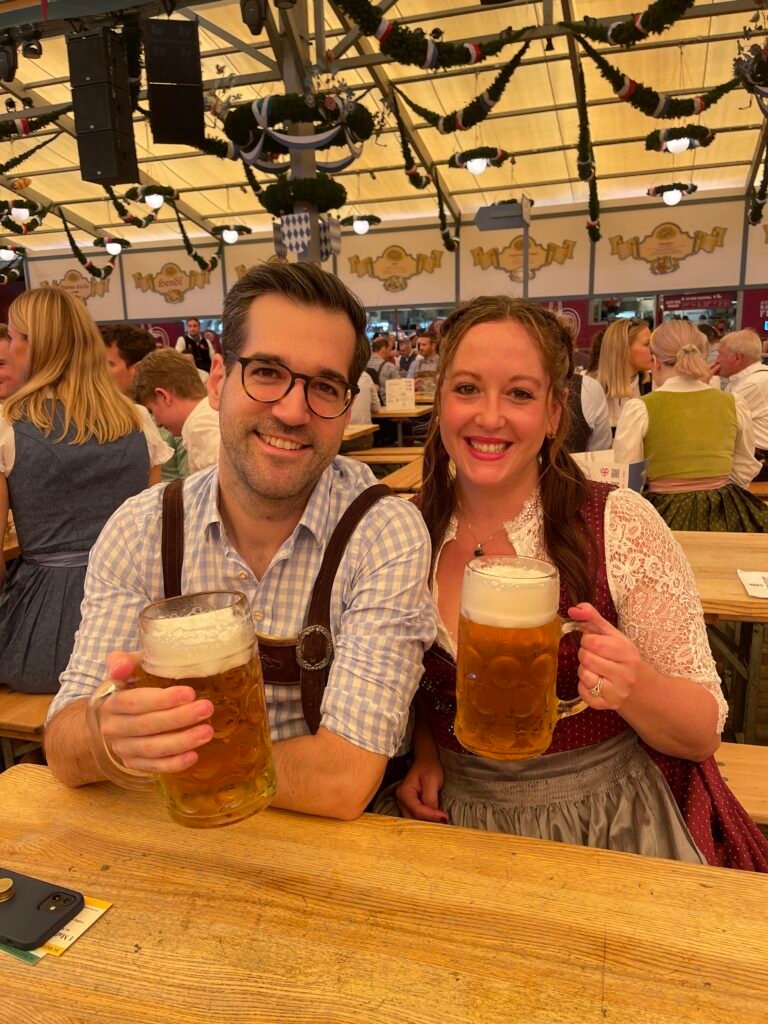
And while parts of it are exactly that…
It’s loud. Crowded. Chaotic at times. There are absolutely moments where you’ll look around and think, “this is completely ridiculous.”
But there’s also something underneath all of that people don’t talk about enough.
Because Oktoberfest isn’t just a party. It’s tradition. It’s history. It’s one of the few places where you’ll watch locals, tourists, grandparents, bachelor parties, families with kids, and people from all over the world somehow exist in the exact same space together over beer, music, food, and shared chaos.
And if you plan it right, Oktoberfest can end up being one of the most unexpectedly fun, bizarre, and genuinely memorable experiences you have in Germany.
Is Oktoberfest Actually Worth It?
Honestly? That depends entirely on what you’re hoping to get out of it.
Are you going because you want to experience one of Germany’s most iconic and historic festivals? Because you want to be part of one of the largest festivals in the world? Because wearing traditional Bavarian clothing and drinking giant beers in a tent full of strangers sounds like a good time?
Then yes. It’s absolutely worth it.
But I also think people misunderstand Oktoberfest a little before they go.
A lot of travelers imagine it as one giant drunken party, and while yes… there is definitely plenty of beer involved, Oktoberfest is also deeply tied to Bavarian culture, tradition, food, music, and social atmosphere in a way that surprises people once they actually experience it.
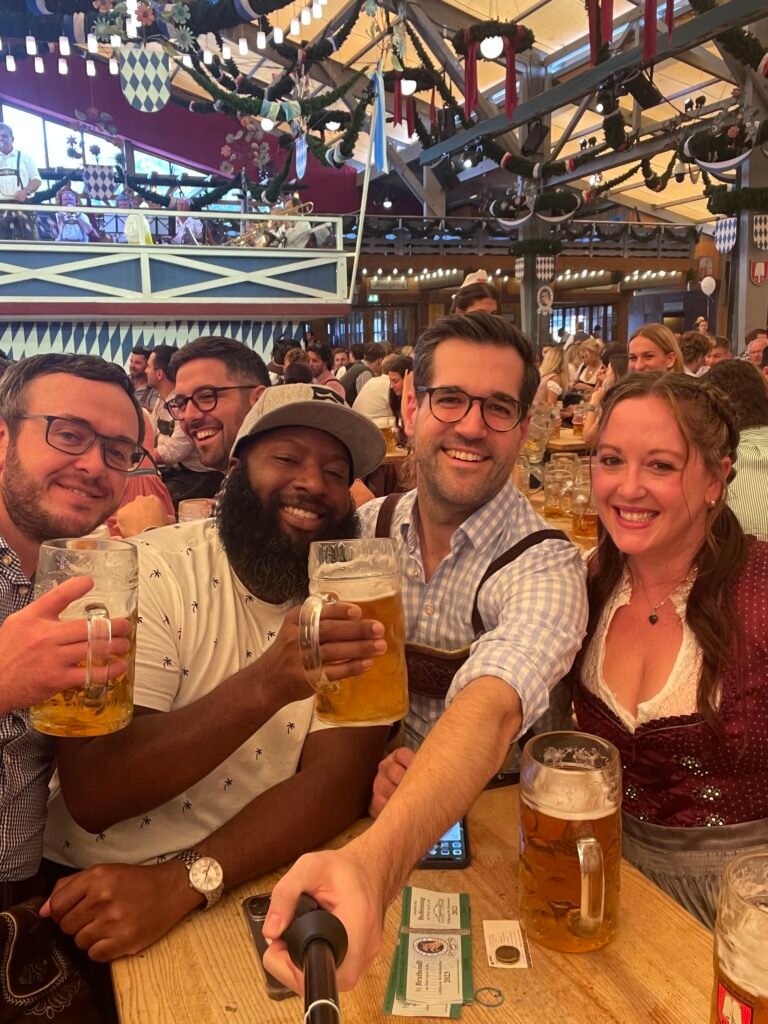
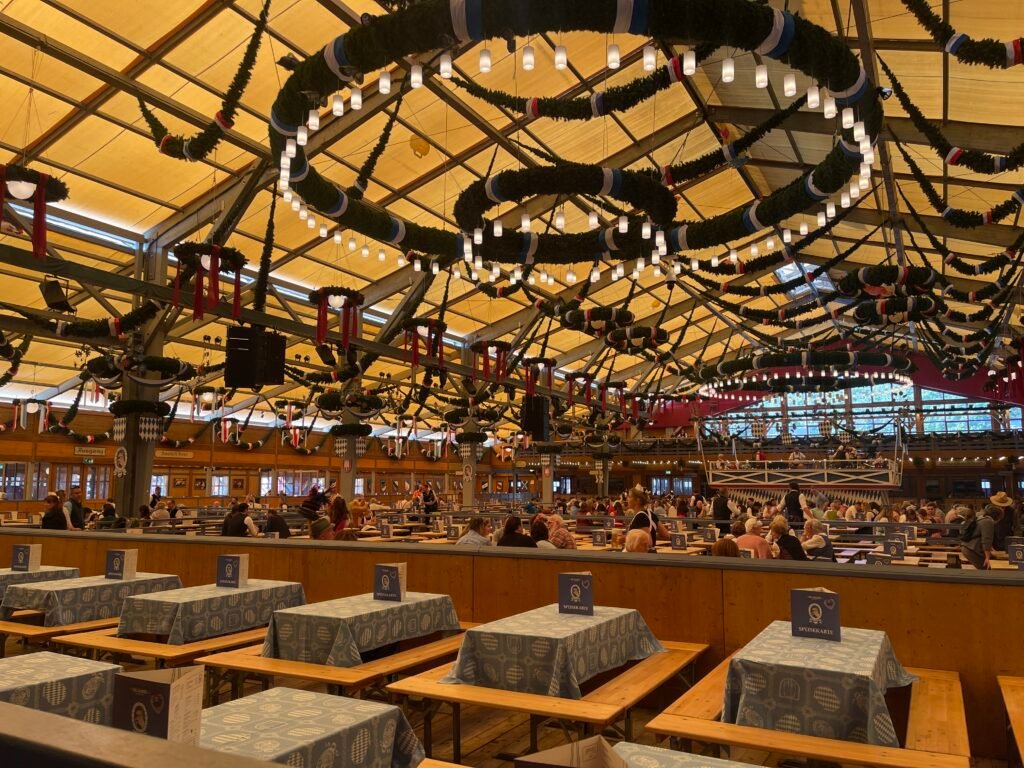
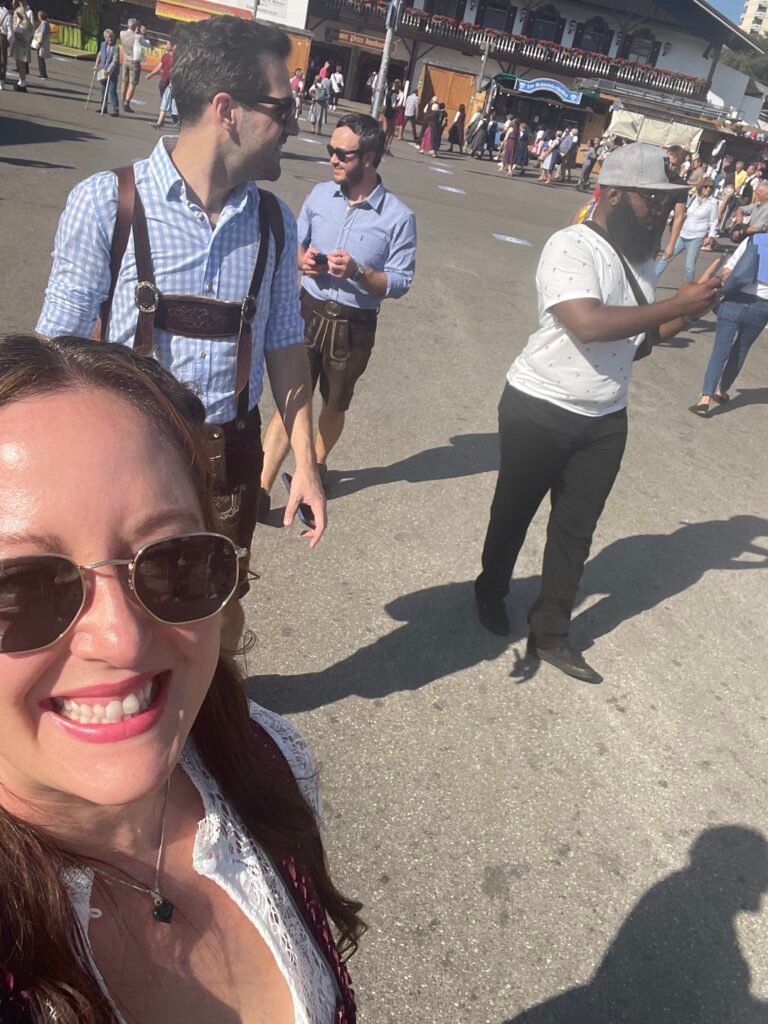
You’ll see entire families walking around together during the day. Traditional brass bands playing inside tents that have existed for generations. Elderly locals in beautifully worn dirndls and lederhosen sitting beside first time tourists trying to figure out how to hold their beer (both literally and figuratively).
One of my favorite things about Oktoberfest is that it somehow manages to feel both incredibly touristy and incredibly local at the exact same time.
There’s also far more to do than people realize.
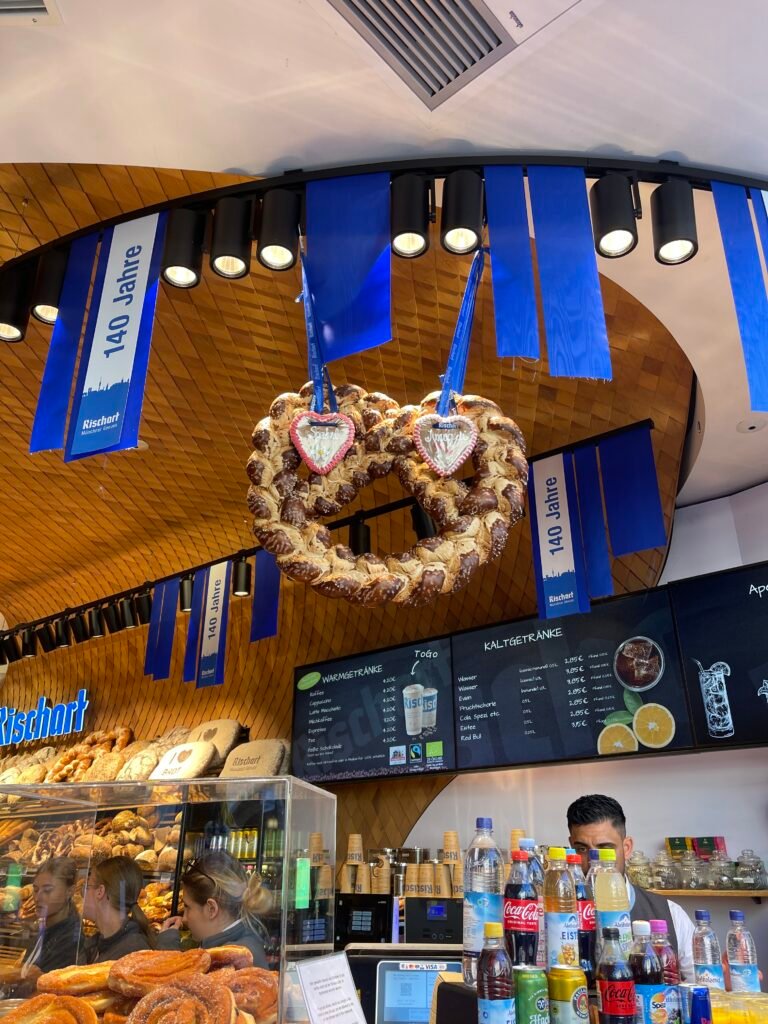
Yes, there’s beer. A lot of it. But there are also carnival rides, traditional foods, fun houses, games, live music, smaller beer tents with completely different atmospheres, parades, sweets, roasted nuts, giant pretzels, and entire sections of the festival that feel more like a massive Bavarian fair than just a drinking event.
And no, you do not have to drink beer to enjoy Oktoberfest. Or even drink at all. You just may want to plan your experience a little differently.
If you’re not a huge drinker, going earlier in the day usually gives you a much more relaxed atmosphere. You can still enjoy the food, music, people watching, and overall energy without feeling like you accidentally walked into the world’s largest frat party at 10 p.m.
Because at the end of the day, Oktoberfest is less about the beer itself and more about the atmosphere around it.
The beer just happens to be the thing everyone remembers first.
The Biggest Mistakes First-Timers Make at Oktoberfest
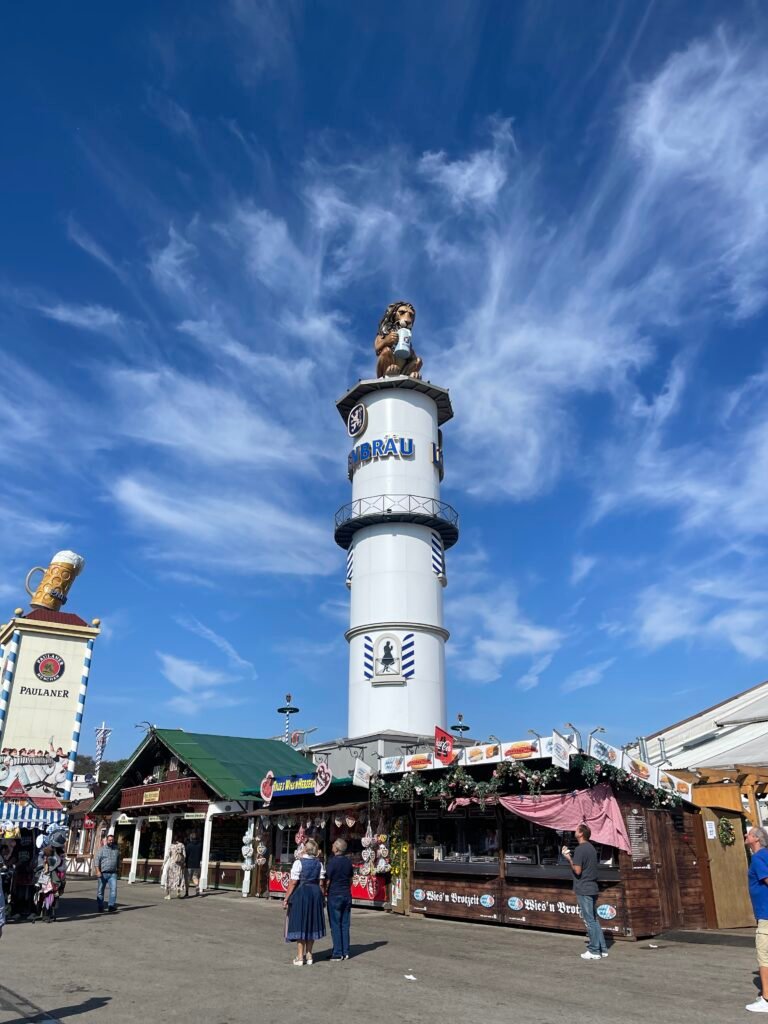
Honestly, I think a lot of people imagine Oktoberfest is something you can casually “figure out when you get there.”And technically… you can. But there are a few things I really wish I would have understood beforehand because I would have saved a lot of stress, confusion, and wandering around.
Not Bringing Enough Cash
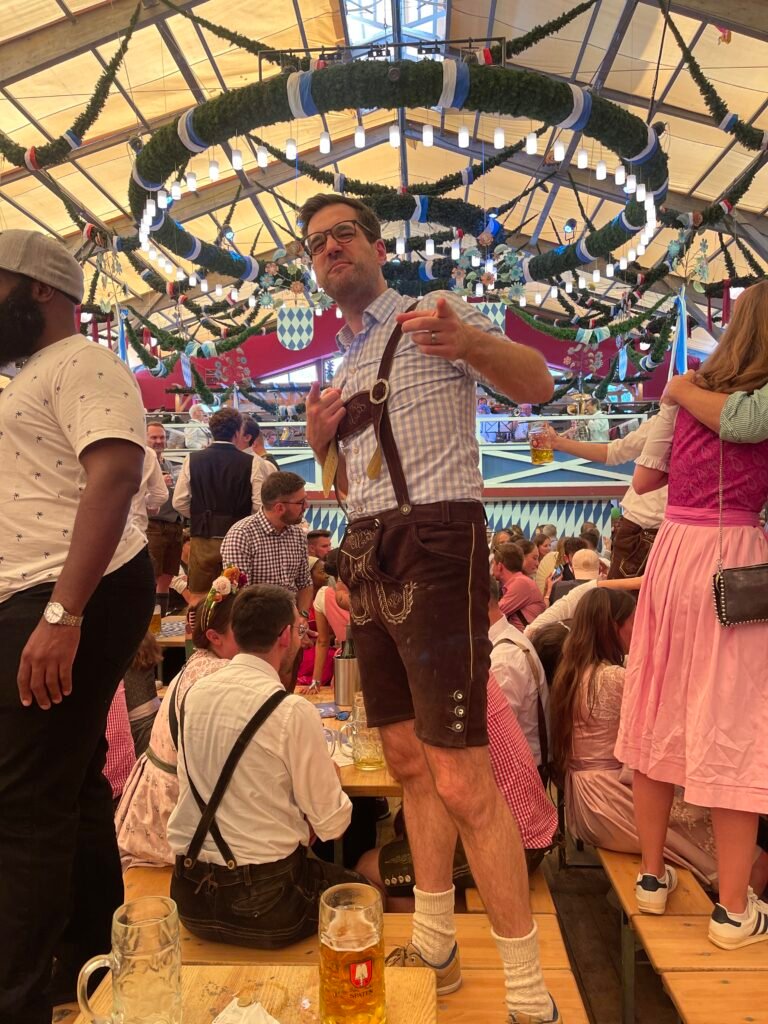
This was probably the biggest mistake we made. Take out more cash than you think you need. Then, add more on top of that.
Germany has improved a lot with card payments over the years, but Oktoberfest can still feel surprisingly cash-heavy depending on the tent, food stand, or vendor. Even now, many of the larger beer tents still primarily operate with cash for day-to-day ordering.
When we went, our tent either didn’t consistently take cards or using them was such a hassle that we actually blew all our cash on beer before we even had the change to walk around. Truthfully, I don’t remember. I blame the giant beers.
let me tell you, trying to find an ATM during at Oktoberfest hours surrounded by thousands of people is not fun.
Bring enough cash for beer, food, rides, tips, late-night snacks & random things you absolutely did not plan on buying.
Oktoberfest has a way of convincing you that you suddenly need a giant pretzel, roasted nuts, another beer and a session in a fun house full of mirrors and moving floors after 2 liters of beer…
Waiting Too Long to Plan
I think people seriously underestimate how far in advance Oktoberfest needs to be planned if you want a smoother experience.
Hotels become incredibly expensive, reservations disappear fast, and the closer you stay to the festival grounds, the more competitive everything gets.
If you want a good hotel location, tent reservations, better prices or a less stressful experience overall you really should start planning close to a year in advance if possible. Especially for weekends.
A lot of tent reservations begin opening months earlier than people expect, and some of the most desirable evening and weekend reservations are often heavily dominated by returning guests.
Because yes, you can absolutely do Oktoberfest last minute… but you’ll usually pay for it either financially or logistically.
Sometimes both.
Thinking You Need Tickets to Enter Oktoberfest
This confuses almost everyone the first time. There is no general admission ticket to enter Oktoberfest itself. You can walk onto the festival grounds completely free, and many tents keep large sections unreserved specifically for spontaneous visitors.
But here’s the part people don’t explain clearly enough. Getting inside a tent is not the same thing as getting an actual seat.
And once the tents become crowded, not having a seat becomes a huge problem because servers generally prioritize people seated at tables. No seat often means no beer service, no food service and sometimes not even being allowed to stay inside the tent once overcrowding starts.
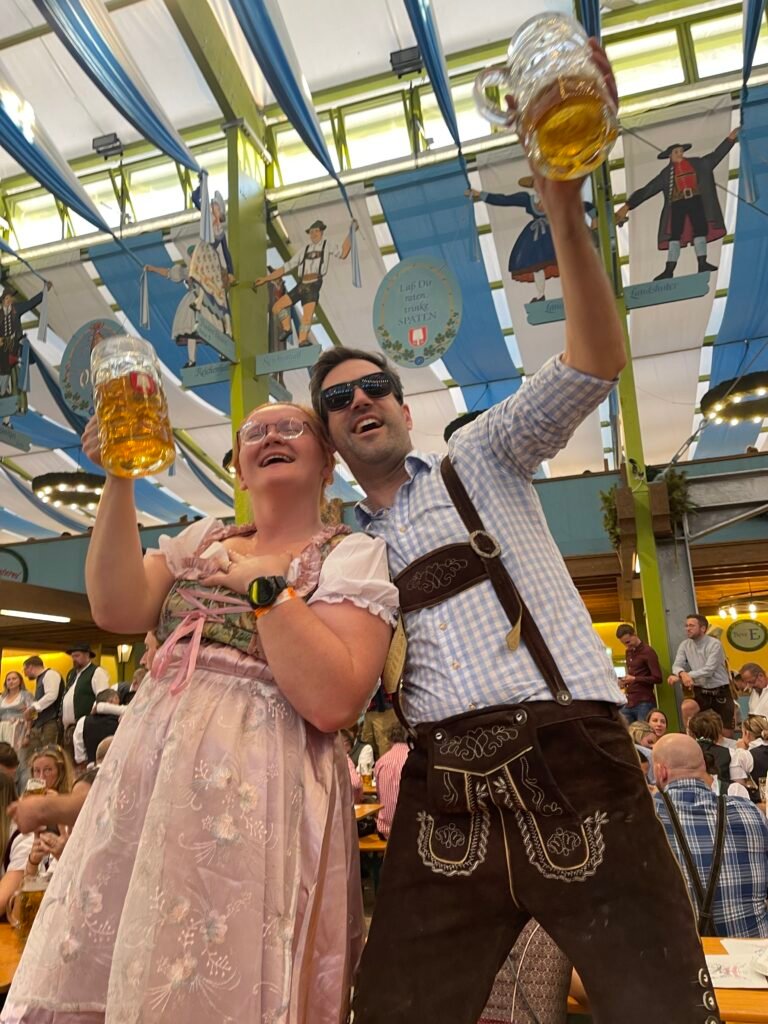
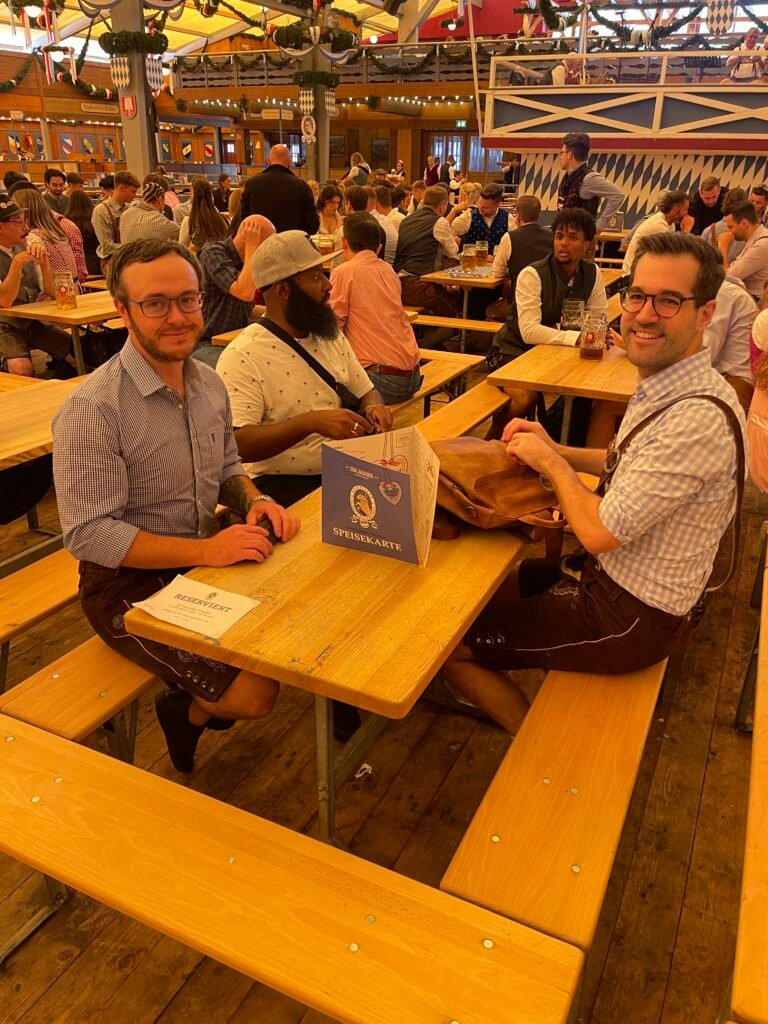
We actually got lucky wandering into a tent later in the day and finding seats, but honestly, I would not rely on that strategy if it’s your first Oktoberfest experience.
Earlier in the day is much easier. Weekdays are easier. Weekends become absolute chaos.
And another thing people don’t realize, some tents temporarily stop allowing people inside altogether once they hit capacity.
Not Understanding How Tent Reservations Actually Work
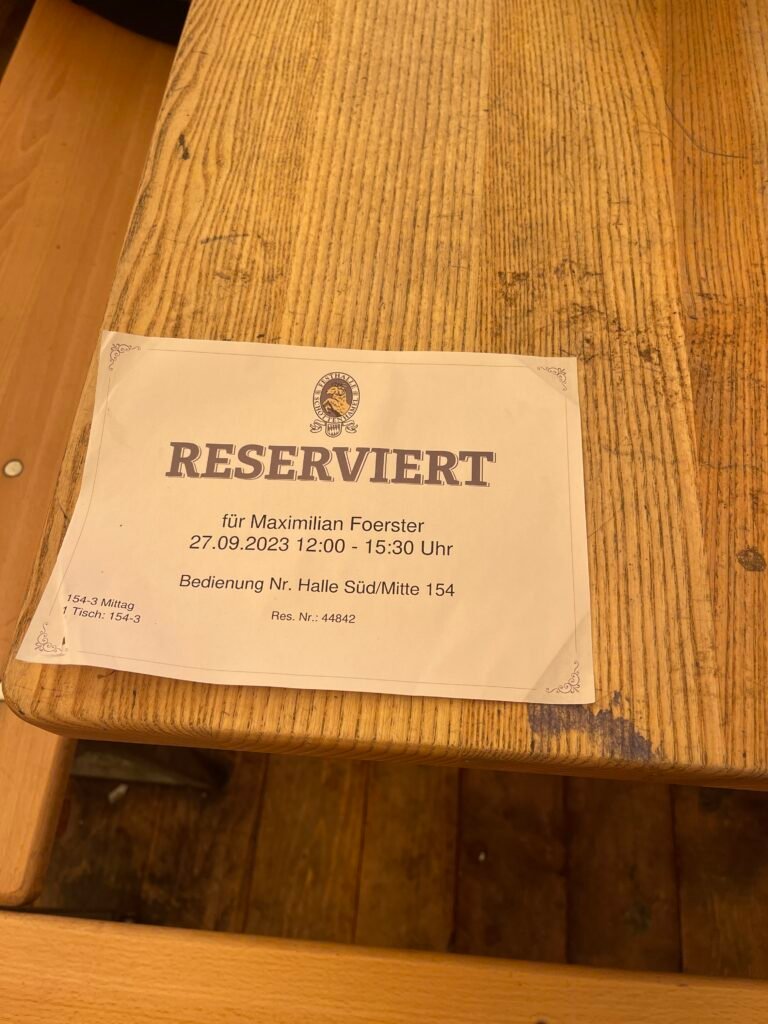
A lot of people think Oktoberfest reservations are expensive “tickets” you’re paying just to sit down. That’s not really how it works. At most tents, reservations themselves are technically free, but you’re required to pre-purchase food and beer vouchers attached to the table. And the food pre-purchased item is very commonly half a roast chicken (Hendl).
And honestly? Before going, the “your reservation includes a half chicken” part sounded slightly absurd to me. But it’s actually very normal there.
Something else people don’t really tell you, if you ask politely, some servers may let you apply the voucher value toward another menu item instead. Every tent operates differently, so nothing is guaranteed, but being kind, patient, and tipping well absolutely helps.
Those servers are carrying an inhuman amount of beer all day long. Trust me, a little kindness goes a long way.
Trying to Overdo It
This applies to both beer and the itinerary itself.
People try to cram Oktoberfest into one chaotic night with zero sleep and some fantasy version of themselves that apparently survives on beer and adrenaline.
And honestly? The people having the best time usually aren’t the ones going the hardest.
They’re the people who arrive earlier, pace themselves, wander the festival grounds, enjoy the rides, food, and sit in the tents longer and actually experience the atmosphere instead of blacking out through it.
Because underneath all the chaos, Oktoberfest is genuinely a really fun cultural experience if you allow yourself to enjoy more than just the drinking part.
Where to Stay for Oktoberfest
Where you stay during Oktoberfest makes a big difference in the experience you have.
After a full day walking around crowded beer tents, carrying giant beers, navigating thousands of people, eating your weight in bratwurst and pretzels and somehow accidentally walking 25,000 steps, the last thing you want is a complicated journey back to your hotel.
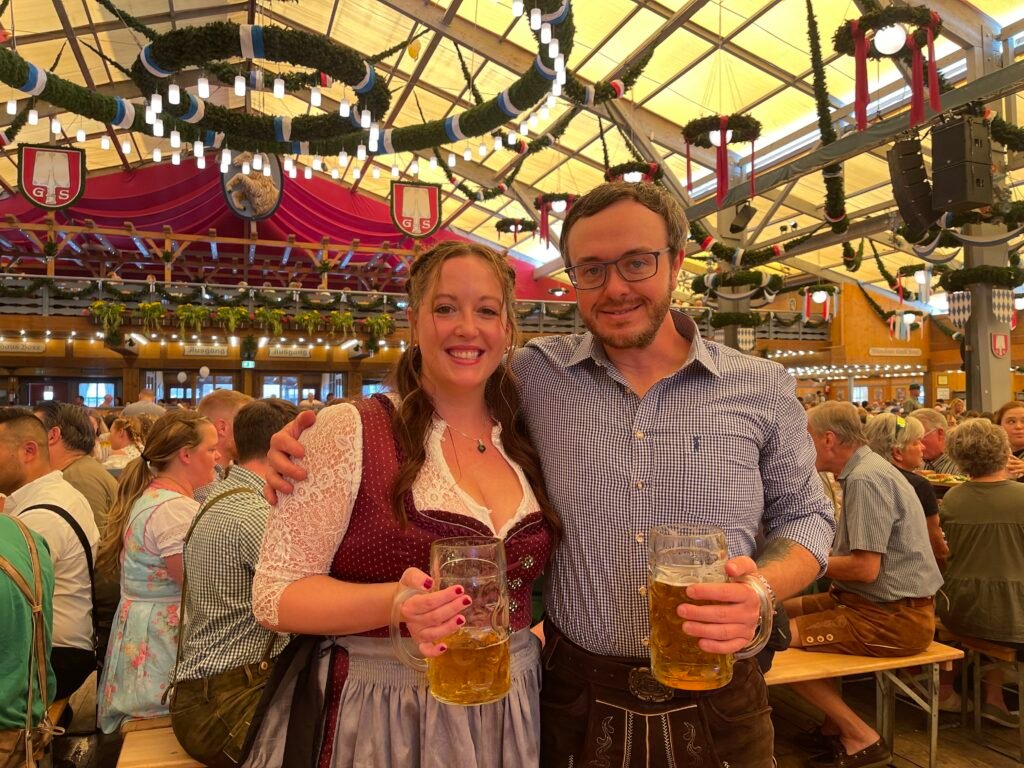
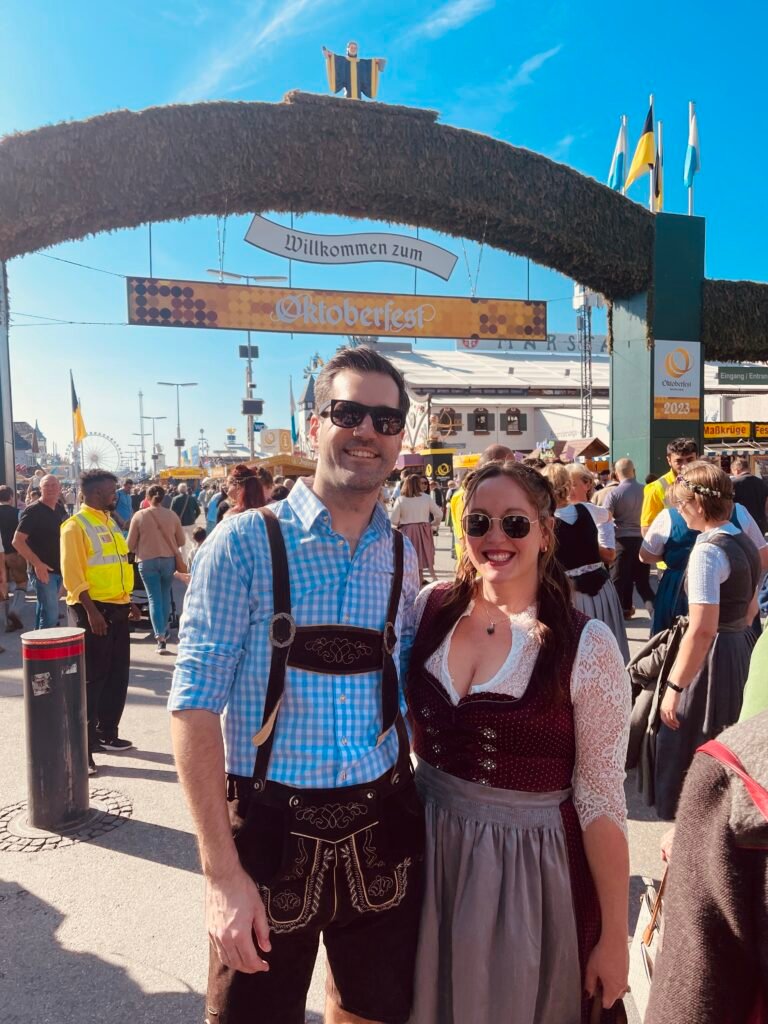
That said, staying directly next to Oktoberfest can get extremely expensive very quickly. The good news is Munich’s public transportation is excellent, so you don’t necessarily need to stay right beside the festival grounds to have a good experience.
The sweet spot is usually walking distance OR one easy direct U-Bahn ride away. The festival itself takes place at Theresienwiese in Munich.
Best Hotels Within Walking Distance of Oktoberfest
These are the hotels that let you realistically walk back after the festival instead of dealing with packed trains late at night.
Solid Choices For Walking Distance Options
Hotel Westend
About a 15–20 minute walk to the Oktoberfest grounds. One of the better value options if you book early and want to stay close without paying full luxury Oktoberfest pricing.
Munich Deluxe Hotel
Roughly a 2-5 minute walk from Theresienwiese. This location is extremely convenient for Oktoberfest.
Boutique Hotel Krone München
Around a 10 minute walk to the festival grounds and honestly one of the better “middle ground” options between budget and boutique atmosphere.
Mid-Range Walking Distance Hotels
Boutique Hotel Atrium München
About a 12–15 minute walk to Oktoberfest and located near Munich Hauptbahnhof, making airport arrivals and train travel very easy.
Courtyard by Marriott Munich City Center
Roughly a 15–20 minute walk to Theresienwiese depending on which entrance you use. Great if you want a more familiar hotel setup while still staying central.
Bayer 89 Vi Vadi Hotel
About a 5-10 minute walk, a really solid option if you want something stylish without fully entering luxury pricing territory.
Luxury Hotels Within Easy Reach
Sofitel Munich Bayerpost
Located near Munich Hauptbahnhof and about a 15 minute walk. One of the best luxury options if you still want convenience.
Koenigshof, a Luxury Collection Hotel, Munich
Around 15-20 minute walk or a 10 minute U-Bahn ride or short taxi ride away depending on traffic. Excellent if you want a more refined luxury experience while still staying central.
The Charles Hotel, a Rocco Forte hotel
Approx. a 25 minute walk, roughly a 10 minute taxi ride or 15 minutes via public transportation to Oktoberfest. Better suited for travelers wanting a quieter luxury atmosphere away from the direct festival chaos, but still near enough.
Best Hotels One Easy Train Ride Away
Honestly, this is usually the smartest overall option.
Munich’s U-Bahn system makes getting to Oktoberfest surprisingly easy, and staying one or two stops away often gives you better hotel quality for the price, lower prices overall, quieter evenings and less overall chaos.
The best areas to target are hotels near U3, U4, U5 or U6 lines.
Hilton Munich City
About 15–20 minutes to Oktoberfest via S-Bahn and U-Bahn connections. Great if you want a slightly calmer area while still staying well connected.
Holiday Inn Munich – City Centre, an IHG Hotel
Roughly 25 minute walk or 10 minutes to Theresienwiese via public transportation and usually much better value than staying directly beside the festival grounds.
Platzl Hotel
35 minute walk or a short 5-10 minutes via U-Bahn. Located near Marienplatz and one of the best options if you want to combine Oktoberfest with actually exploring Munich beyond the festival itself.
Is It Worth Staying Walking Distance?
If your budget allows it, yes.
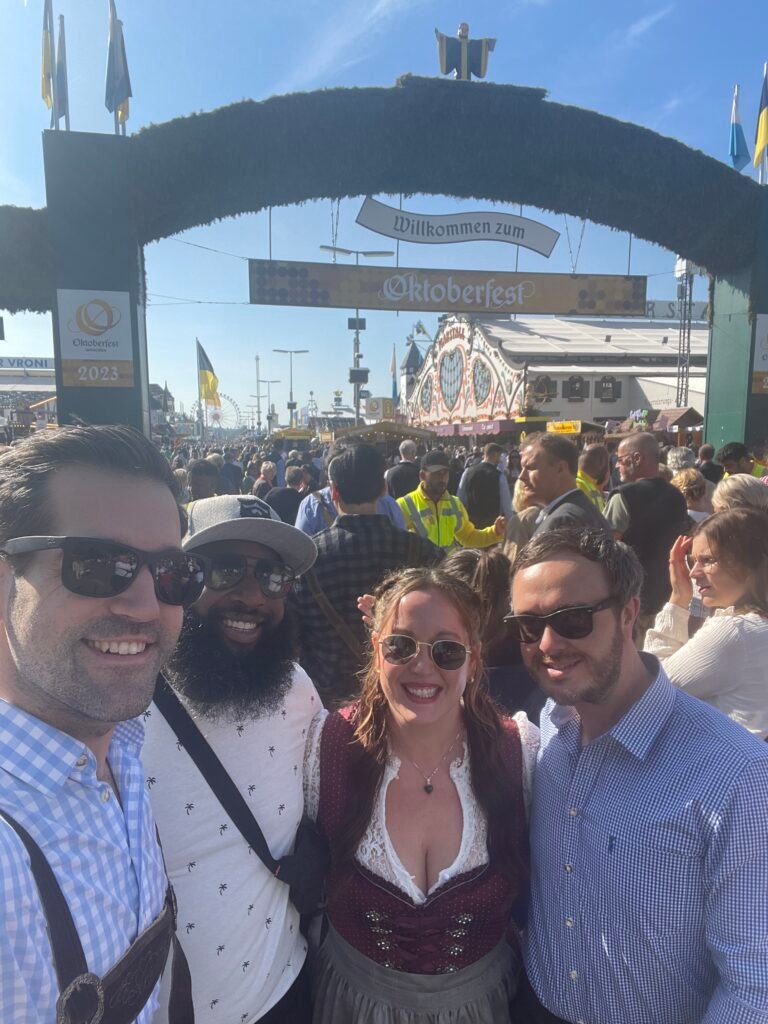
There is something deeply magical about being able to walk back to your hotel after Oktoberfest instead of squeezing yourself onto an overcrowded late-night train surrounded by thousands of equally exhausted people in stinky lederhosens.
But if prices become unreasonable, staying near a direct U-Bahn line is completely fine and honestly what many repeat visitors end up doing anyway.
How Many Days You Actually Need
I think one full day at Oktoberfest itself is usually enough for most people.
That might sound surprising considering how famous it is, but Oktoberfest is intense. It’s loud, crowded, overstimulating, and somehow physically exhausting even if you aren’t drinking heavily. Between the walking, crowds, music, giant beers, general chaos, and jet lag most people are very ready for a slower day afterward.
That said, if you’re flying in internationally, I personally think a 3-day stay in Munich is the sweet spot.
Something like this works really well:
Day 1:
Arrive in Munich, check into your hotel, walk around the city a bit, eat something comforting and carb-heavy, and try not to immediately destroy yourself.
Day 2:
This is your full Oktoberfest day. Start earlier than you think you need to, pace yourself, enjoy the tents, food, rides, and atmosphere, and accept that you will somehow walk an absurd amount despite mostly sitting and drinking beer.
Day 3:
This is your ecovery day. I recommend heading to the Hofbräuhaus and eating all the schnitzel, schweinshaxe, pretzels and Obatzda your body demands while wandering around Munich at a significantly slower pace.
This is also where Germany starts making a really good larger trip.
Munich connects incredibly easily to: Salzburg, Austria, the Bavarian Alps, Neuschwanstein Castle, the Black Forest, Switzerland, northern Italy and so many smaller German towns people completely overlook such as Gengenbach.
So if you’re already flying all the way to Germany for Oktoberfest, I’d really encourage turning it into a larger Europe or Germany itinerary rather than just flying in for one chaotic night and immediately leaving.
But if your only goal is Oktoberfest itself?
I’d still recommend at least 3 days total
How Beer Tent Reservations Really Work
This is probably the most confusing part of planning Oktoberfest because there is no single “official Oktoberfest reservation system” where you just pick a tent and check out like you’re buying concert tickets.
Each beer tent handles reservations separately (Germany, AMIRIT?) through their own website or reservation system.
That’s where a lot of people get overwhelmed.
So here’s how it actually works.
Step 1 – Decide Which Tent You Want
Every tent has a completely different atmosphere.
Some are: more traditional, more international, more party-heavy, more local, quieter, younger, family-oriented or absolutely chaotic.
The official Oktoberfest website has one of the best overviews of all the tents along with atmosphere, size, music style, food, reservation info and direct booking links.
You can browse all tents here:
Step 2 – Use the Official Reservation Links
The easiest starting point is the official Oktoberfest reservation portal and information page:
Official Oktoberfest Reservation Information
This page links directly to, the large tents, smaller tents and official booking systems.
Step 3 – Change the Website to English
A lot of the tent websites are still primarily in German, which honestly scares people way more than it should.
Usually you can look for “EN” in the top corner or right click in Chrome and select “Translate to English”
On iPhone Safari tap the “aA” symbol in the address bar then select“Translate Website”
Even translated accurately, most reservation forms are still fairly manageable once you understand what you’re looking at.
The important parts are usually date (don’t forget in Europe November 7th, 1988 would be written like 7.11.1988 rather than 11.7.1988 as we do in the US. It’s day + month then year.) lunch vs evening reservation, number of people, indoor vs outdoor seating and contact information.
Step 4 – Understand What You’re Actually Reserving
You are NOT buying admission tickets to Oktoberfest. You are reserving a table inside a specific tent during a specific time slot. And most tents only reserve full tables usually for 8–10/10-12 people. You are not typically able to only purchase two seats at a table. You have to buy the whole table.
Most reservations also require prepaid beer vouchers and food vouchers which are usually included in the final reservation price.
Step 5 – Know That Timing Matters A LOT
This is the part people underestimate. Weekday lunches? Sometimes manageable without reservations. Weekend evenings? Absolute chaos. Some tents start restricting entry surprisingly early once capacity fills, especially on weekends.
And certain times such as weekend, evenings, opening weekend, Italian weekend and closing weekend can become extremely hard to obtain access to tents and tables.
If Oktoberfest is a bucket-list trip for you my recommendation is to plan early, stay flexible and don’t assume you’ll just casually walk into any tent at peak hours. Because sometimes you absolutely can but sometimes you’ll be standing outside staring at a “temporarily closed due to overcrowding”.
What Nobody Tells You About Oktoberfest
There are a lot of guides online explaining how to reserve tents, what to wear and how much beer costs, but there are certain things about Oktoberfest people only seem to learn while actively standing inside Oktoberfest slightly overwhelmed and wondering why nobody warned them beforehand.
So here are the things people don’t tell you enough.
Oktoberfest Is Physically Exhausting
I know that sounds dramatic considering most people associate Oktoberfest with sitting at tables drinking beer, but somehow this festival is genuinely exhausting.
You walk constantly.You stand constantly. You’re navigating crowds all day long. You’re carrying/lifting giant 1-liter beers. And even if you’re not drinking heavily, the sheer amount of stimulation wears you out faster than you expect.
Most first-timers massively overestimate how hard they’re going to party and underestimate how badly they’ll want carbs and silence the next morning.
The Beer Is Stronger Than People Realize
This is another thing that catches people off guard. Oktoberfest beer is not regular beer.
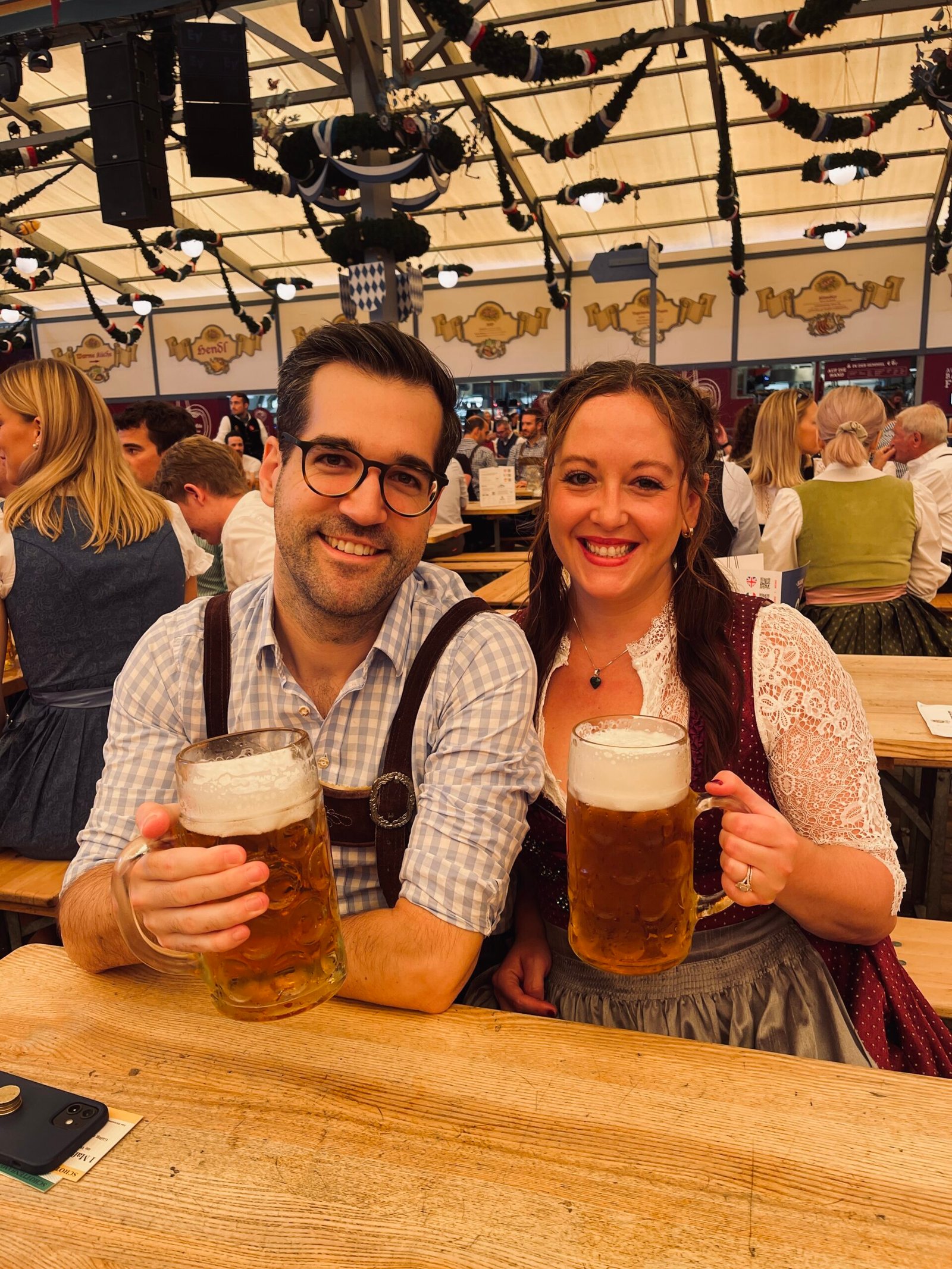
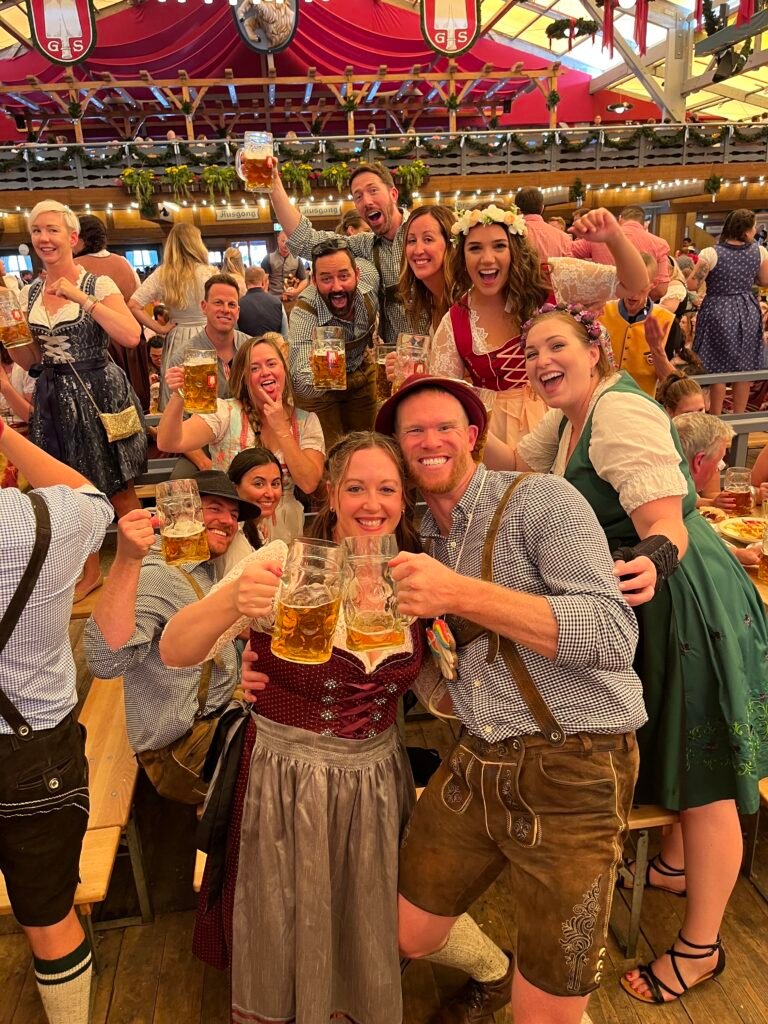
The beer served inside the official tents is specially brewed Oktoberfest beer and is generally stronger than standard German lagers, usually around 6% alcohol or slightly higher. And the serving size? One Maß Which is one full liter….People come in thinking “I drink beer all the time.” And then suddenly they’re three liters deep at 2 p.m. listening to brass music emotionally attached to strangers they met 45 minutes ago. TRUST me when I say PACE YOURSELF and eat actual meals and drink water.
Seriously.
You Will Probably Sit With Strangers
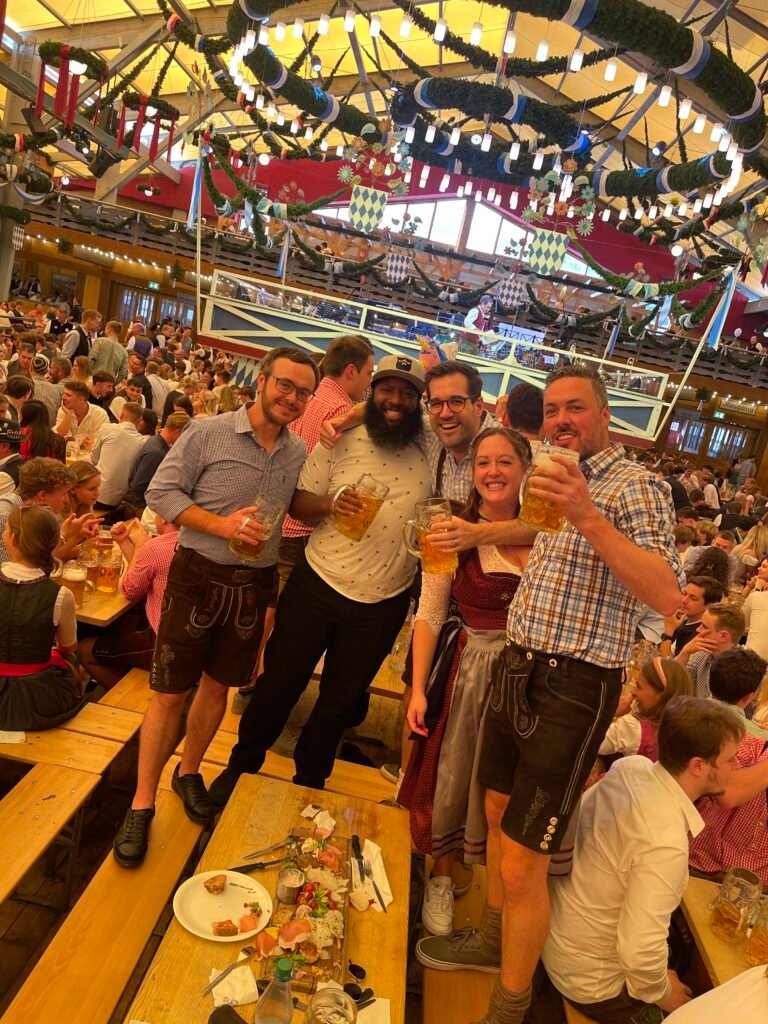
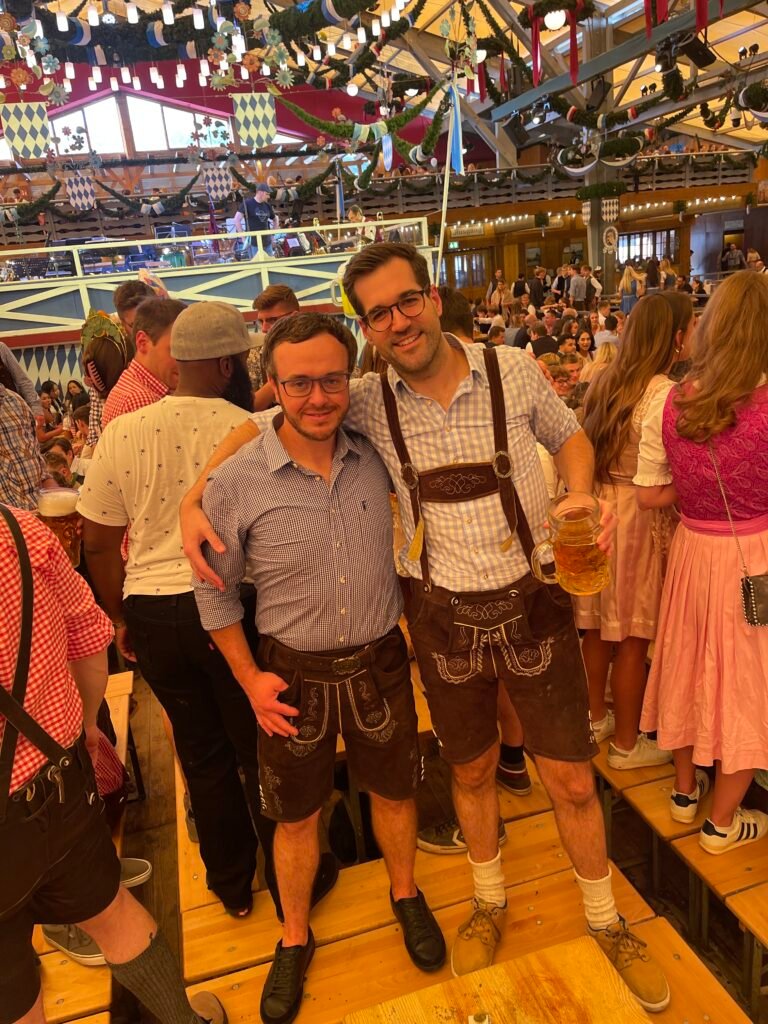
And honestly? That’s part of the magic of it. Unless you reserved an entire table with a large group, there’s a very good chance you’ll end up sharing space with people from Germany, Australia, Italy the US or basically every other country on earth.
And somehow within an hour everyone is singing together like lifelong friends despite barely being able to communicate.That chaotic social atmosphere is honestly one of the most memorable parts of Oktoberfest.
The Bathrooms Become Part of the Experience
Nobody warns you enough about this. Yes, the bathrooms are free inside the tents, but throughout Germany in general, public toilets often require coins or small payments and honestly? Having small euro coins on you at all times in Germany is just generally smart travel advice. Also, the bathroom lines later in the evening become absolute chaos. Plan you pee breaks accordingly.
You Don’t Have to Wear Traditional Clothing… But You’ll Probably Want To
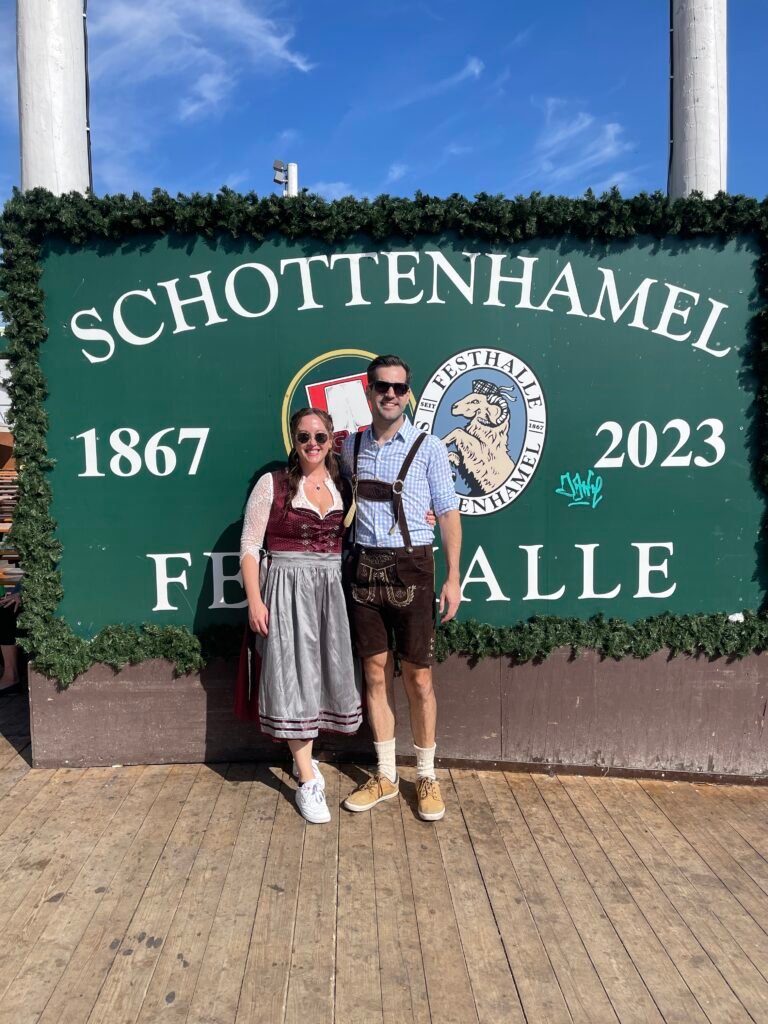
No, you do not need a dirndl or lederhosen to attend Oktoberfest, but once you arrive and see almost everyone dressed up, there’s a very high chance you’ll wish you had participated a little more.
I think It genuinely adds to the atmosphere.
That said please do not buy the ultra-cheap “Halloween costume” versions online if you can avoid it. People absolutely notice the difference. You will be noticed and deemed “That Tourist”.
You do not need expensive authentic clothing, but even a more simple or modern version usually looks much better than the plastic costume versions.
The Earlier You Go, the Better the Experience Usually Is
This might honestly be my biggest overall Oktoberfest tip. People imagine nighttime must be the peak experience because bigger crowds, louder music and a crazier atmosphere And yes, evenings absolutely become wild. But daytime Oktoberfest is honestly far more enjoyable for many travelers.
You can move around, find seats more easily, enjoy the tents and experience the festival before it reaches maximum chaos levels.
Especially for first-timers.
Oktoberfest Is Surprisingly Emotional
This sounds ridiculous until you experience it yourself.
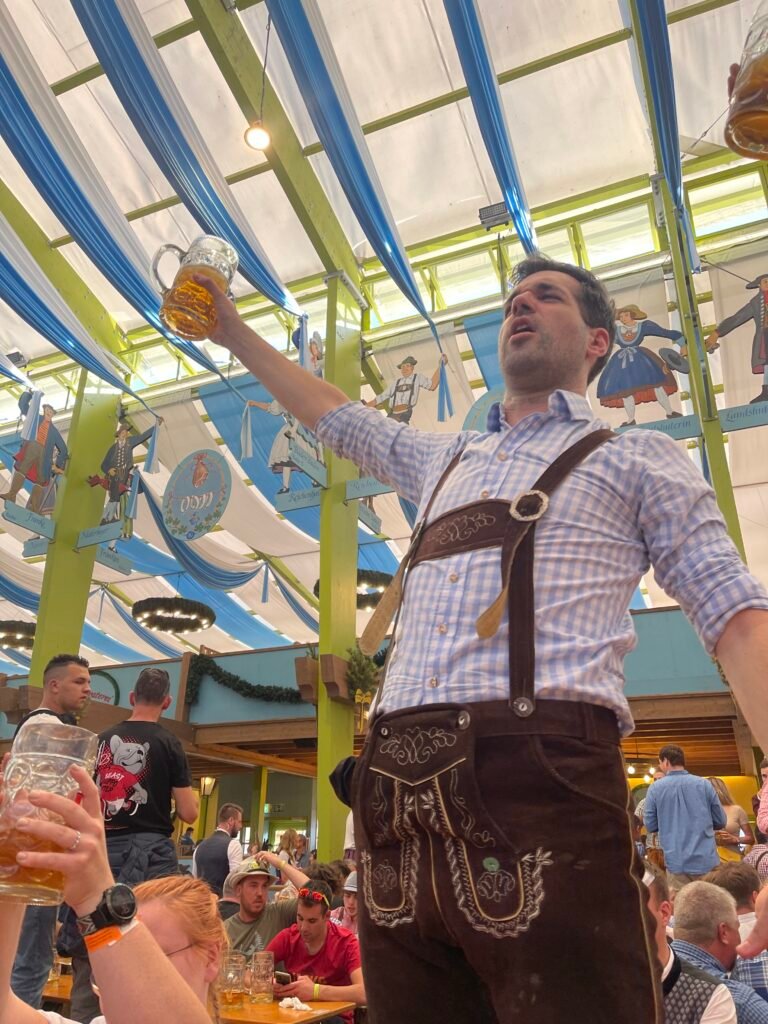
But there’s something strangely emotional about thousands of people singing together inside a beer tent while brass music echoes through the entire place and giant beers slam against wooden tables.
It feels chaotic. Touristy. Traditional. Ridiculous. And weirdly human all at the same time. That’s probably why people keep coming back. This intangible feeling that draws you in year after year.
Oktoberfest for First Timers: Tips That Will Save You Stress
Avoid Saturdays If You Can
If you have flexibility, do not make Saturday your only Oktoberfest day. Especially your first Saturday. It is by far the busiest day of the festival and the atmosphere shifts from “fun chaotic”
to “human traffic simulation”… very quickly. It’s not a fun time.
Weekdays are drastically easier. Sunday is significantly better than Saturday. And daytime is usually far more enjoyable for first-timers overall.
The Closest Train Station Is Not Always the Best One
Most people automatically try to use Theresienwiese station. Which makes sense in theory because it’s closest. But during peak hours, stations can temporarily close or become incredibly crowded due to crowd control. Munich public transportation becomes extremely packed during Oktoberfest. Sometimes it’s honestly easier to walk a little farther and use Goetheplatz, Schwanthalerhöhe or Hackerbrücke instead.
Especially at the end of the night when everyone leaves simultaneously.
Do NOT Bring a Giant Bag or Backpack
This is one of those things people only mention after getting turned away or stuck dealing with security lines. Larger bags and backpacks are heavily restricted at Oktoberfest for security reasons, and bag checks are common. Consider bringing a small to medium crossbody instead. I feel you are less likely to get turned away with a cross body opposed to a backpack. You genuinely do not want to carry unnecessary stuff around all day anyway.
Planning Your Germany Trip Beyond Oktoberfest
One of the biggest mistakes I think people make with Oktoberfest is flying all the way to Germany… only to spend one chaotic weekend in Munich and leave thinking they’ve somehow “seen Germany.” Because Germany is so much more than beer tents and giant pretzels. In my opinion, Oktoberfest works best when it becomes part of a larger trip.
If you’re planning a Germany trip around Oktoberfest and want help figuring out logistics such as train routes, hotels, how long to stay, where to go after Munich, that’s exactly what I help my clients do.
Because the best Germany trips usually aren’t the ones where you see the most.
They’re the ones where the trip actually flows naturally and leaves room for the moments you didn’t plan for in the first place. These are the exact type of trip I plan for my clients everyday. Click here to learn more about working with me to plan your trip!