Barcelona is full of cooking classes. If you search online, you’ll find hundreds of them. Most promise the same thing: learn to cook paella, drink some sangria, take a few photos, and go home. But somewhere between the cutting boards and simmering pans, something often gets lost.
The soul of Spanish food culture.
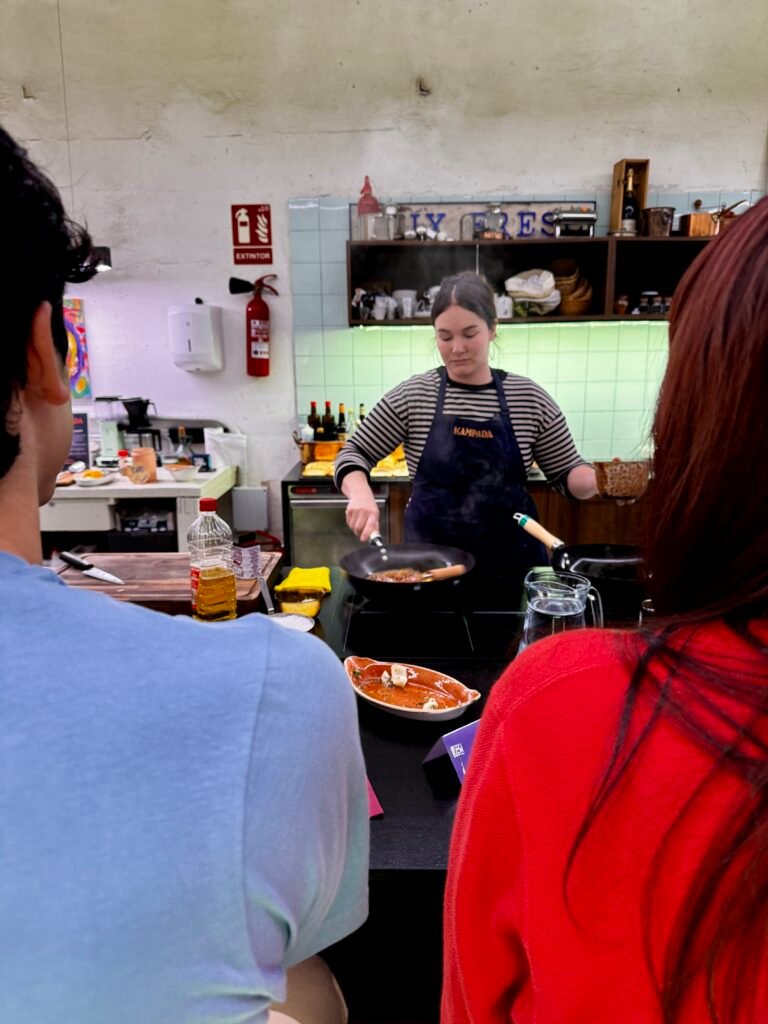
During my time in Barcelona, I joined a Kampada cooking class, an intimate culinary experience designed not just to teach travelers how to cook traditional Spanish dishes, but to recreate the way food actually brings people together in Spain.
When I sat down with one of the founders behind Kampada Cooking Classes, Eduardo López, in Barcelona, he looked a little nervous. Kind. Tentative. Admittedly unsure about the whole situation. He told me almost immediately that he had never done anything like this before. I laughed and told him the truth, that I was probably more nervous than he was.
After all, who am I?
I’m no famous journalist. No celebrity chef. Just a curious traveler who happens to write stories about the places and people she meets along the way. I assured him there was nothing to be nervous about. He sat there for a moment looking a little anxious, hands folded in his lap. But the second he began telling me the story behind Kampada, something changed. His face lit up. The nerves disappeared. And suddenly the conversation became easy.

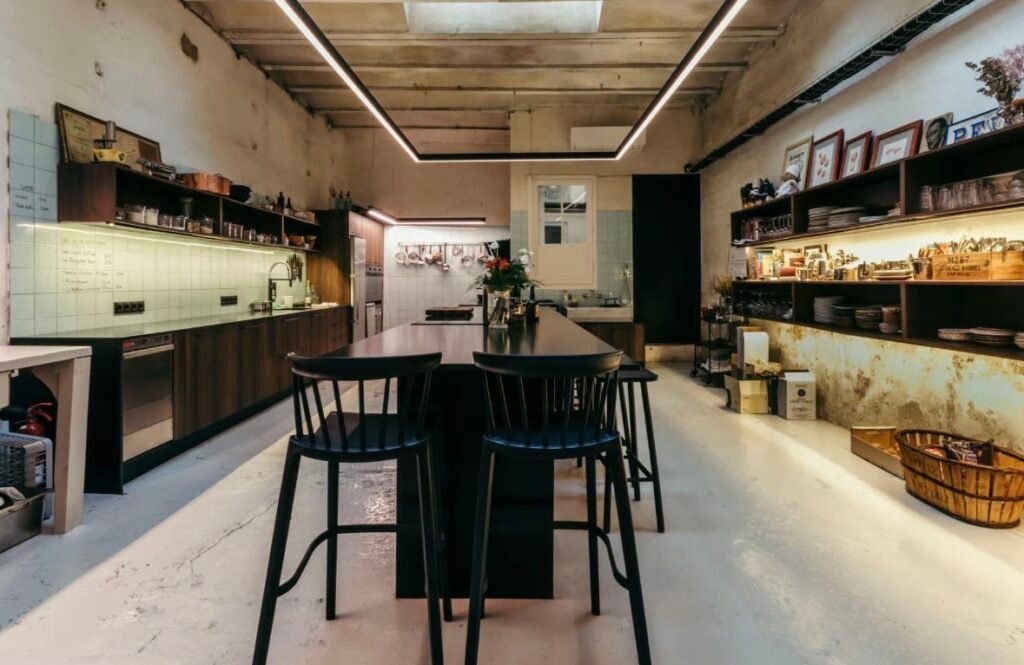
A Different Kind of Cooking Class in Barcelona
One thing that stood out to me almost immediately during the experience was that this wasn’t a traditional cooking class.
If you’ve taken cooking classes before, you probably know the format. Everyone stands at their own station, carefully following instructions while trying not to burn whatever is in the pan in front of them.
While Kampada does offer fully hands-on cooking workshops where guests prepare their own dishes step by step, this particular experience was designed a little differently.
It feels less like a cooking class and more like something closer to a chef’s table with optional participation where guests are welcome to jump in, but the experience is just as much about watching, talking, tasting, and being part of the moment.
When I asked why they designed it this way, the answer took me somewhere unexpected: back into a family kitchen.
Growing up, paella day in their home was never a solo activity. Everyone had a role.
His father was always in charge of the paella itself, with him helping by his side. While the pan slowly cooked, his sister and mother prepared tapas in the kitchen, and his grandparents would arrive carrying charcuterie to snack on while everyone waited. The meal wasn’t just about the food. It was about the time spent together while it cooked. “In Spain,” he explained, “paella is a bit like a barbecue.” It’s an excuse to gather. To talk. To laugh. To spend hours around a table while the meal slowly comes together. And that philosophy shaped the way Kampada designed their classes. Instead of everyone preparing their own individual dish, the group works together to create one shared meal. Some people chop ingredients. Others stir or season. Some simply pour another glass of sangria and watch the paella slowly come to life.
But because everyone contributes to the same dish, something important happens. People talk more. They laugh more. They notice the people around them. And the experience starts to feel less like a class and more like what the founders always hoped it would be. A table full of strangers becoming something closer to friends.


How Kampada Cooking Classes in Barcelona Began
Kampada didn’t start as a cooking class. In fact, it almost started as something entirely different. The founder told me he was previously working for a party-focused travel company a job that never quite felt right. “I was not really feeling identified with what I was creating or selling.” So he quit.
The original dream was to build a community of travelers and take them on trips around Europe. But starting a company is expensive, and while they work toward that goal, they needed something to keep the lights on. Then an opportunity appeared. A space. And an idea. Cooking classes.
But if they were going to do it, they were going to do it differently.


Avoiding Tourist Trap Cooking Classes in Barcelona
Barcelona’s food scene is incredible, from local markets to experiences like cooking classes and flamenco performances.
But like many famous cities, it also has its share of shortcuts and tourist traps.
“Those yellow paellas you see on Las Ramblas,” he told me, shaking his head. “Many of them are not good.” And the same problem existed with cooking classes. Many were rushed. Impersonal. Focused on pushing as many people through the door as possible.
He had even seen it firsthand while working in travel. “The quality of the product they were selling… it didn’t fit our standards.” So Kampada set out to change that.
Recreating the Way Spaniards Actually Eat
If you’ve ever shared a meal in Spain with locals, you know something important. Food isn’t rushed. It’s not transactional. It’s social. People gather around a table. They open a bottle of wine. Tapas appear slowly. Someone stirs the paella while everyone else talks. Hours pass without anyone noticing. That’s the experience Kampada wanted to recreate.
“Like a Sunday with friends,” he explained.
You cook together. You snack on tapas while the paella simmers. You sit down at a table and eat, not as strangers, but as people who just shared an experience.

The Secret Ingredient: Connection
At Kampada, the cooking class is only half the story. The real goal is connection between travelers. Connection with the chef. Connection with Spanish culture and gastronomy.
“When you meet people while traveling,” he told me, “it creates a very special connection.”
You might only spend a few hours together, but something about those shared travel moments, swapping stories, talking about where you’ve been and where you’re going, creates a kind of instant camaraderie. Food just happens to be the bridge that brings everyone together.
Why Kampada Keeps Their Barcelona Cooking Classes Small
Another difference? Size. Kampada intentionally keeps classes small, around 12 people maximum. Many cooking schools pack rooms full of guests to increase profits. But that changes the experience. “You lose something,” he explained. With smaller groups, people relax. They talk. They laugh. They sit comfortably instead of crowding around a counter waiting for their turn. And slowly, strangers start to feel less like strangers.
Learning Spanish Cuisine From Local Chefs
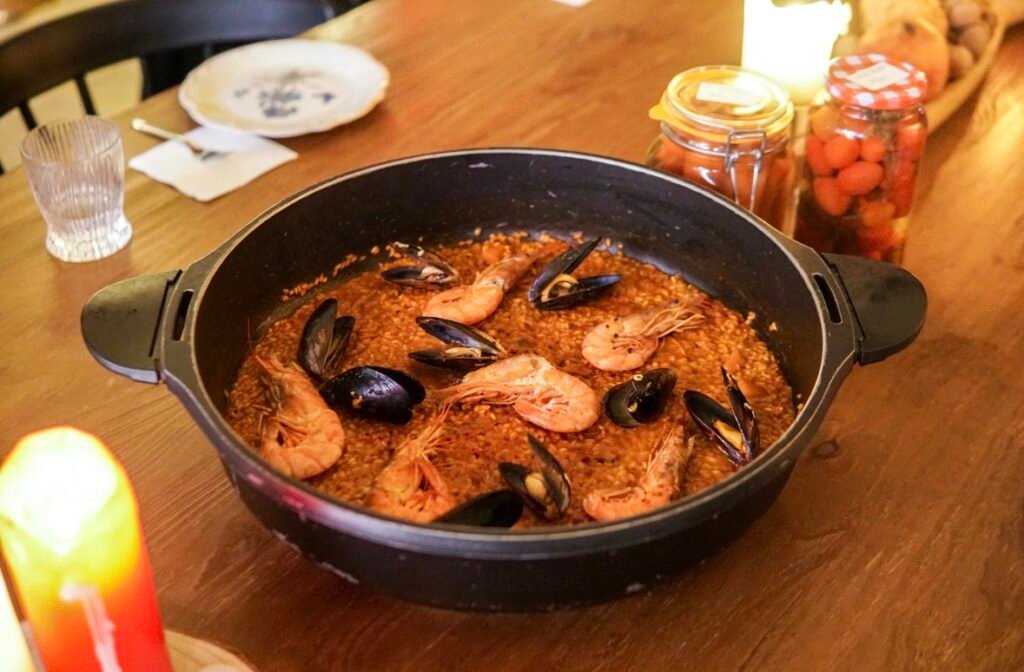
Another detail Kampada refuses to compromise on: The chefs. If they’re teaching Spanish or Catalan cuisine, the chef must be local. Why? Because these dishes aren’t just recipes. They’re traditions. They’re memories. They’re meals that have been cooked in family kitchens for generations.
“We want them to replicate the way we actually do it in Spain.”
And when someone who grew up with these dishes teaches you how to make them, you’re not just learning ingredients. You’re learning culture.
How Kampada Became One of the Most Unique Cooking Classes in Barcelona
One of the most surprising things I learned during our conversation was how Kampada began. The founders have known each other since they were three years old. They grew up together. Went to school together. Built this company together. The chefs who taught their very first cooking class were childhood friends too. When that first class ended, they went out to celebrate.
“We were like… what just happened?” It had worked. And from that moment forward, Kampada began growing faster than they ever expected.
More Than Just a Cooking Class
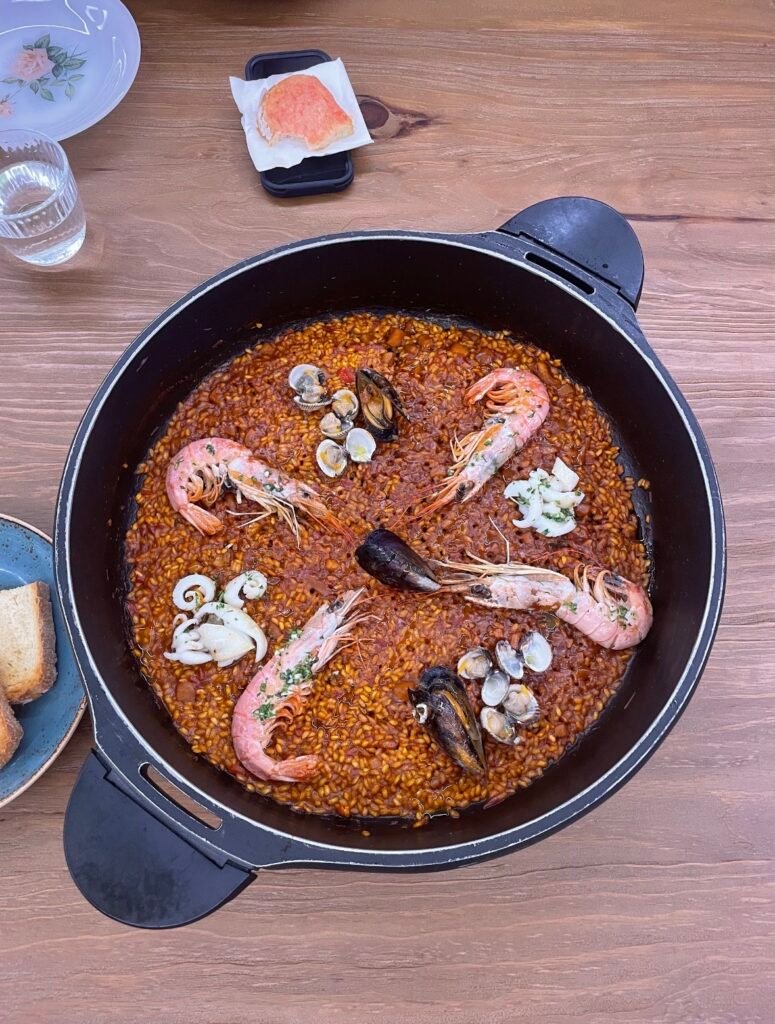
Today, Kampada is expanding beyond cooking workshops. They’re developing: gastronomy events, team-building experiences for companies, future food-focused trips, cultural food experiences around the world. But the mission hasn’t changed. Connection. Because food has always been one of the simplest and most powerful ways humans bond. You see it everywhere, from family dinners to street markets. Food invites conversation. It lowers barriers. It creates shared memories.
Why This Barcelona Cooking Class Stays With You
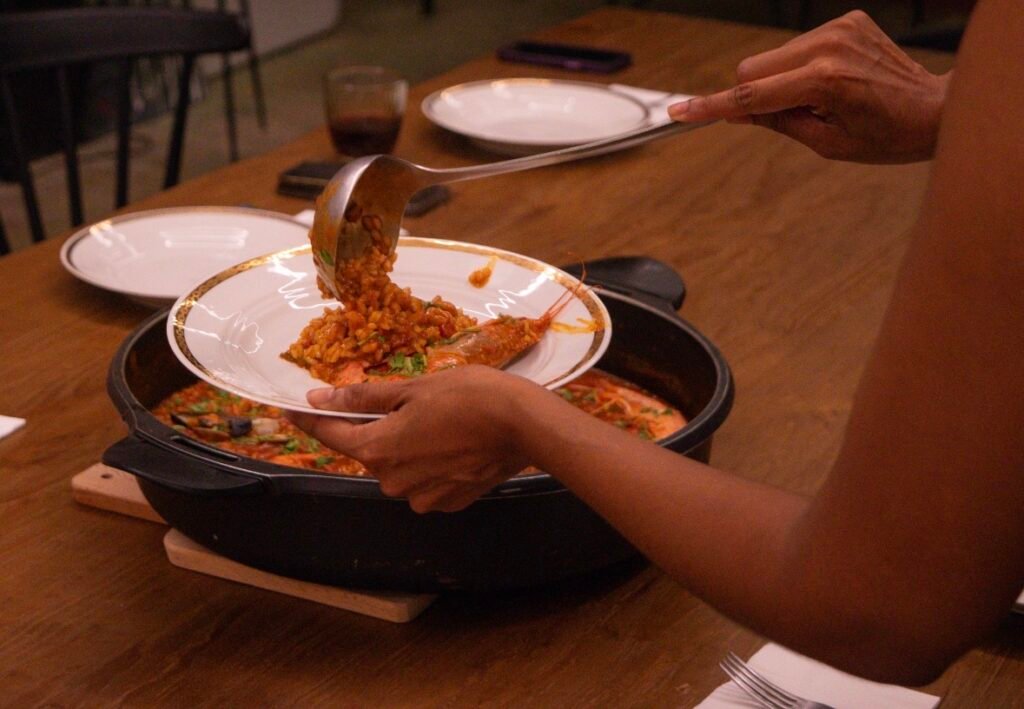
By the time the paella was finished and we all gathered around the table, something interesting had happened. The room no longer felt like a group of strangers who had signed up for the same class. There was a girl from the Southern US whose accent instantly caught my attention, the kind of familiar southern drawl I used to have before years of travel slowly softened it. There was another young woman from the U.S. who was studying abroad in the U.K., and a couple from England whose accents were so charming you couldn’t help but smile every time they spoke. And somehow, in the span of a few hours, we had all ended up around the same table, sharing a meal and swapping stories about the places we had been and the places we still hoped to see. They were younger than me, quite a bit younger, actually, and as I listened to them talk about travel, I couldn’t help but see something familiar in their excitement.
It felt a little like looking back in time. The curiosity. The wide-eyed wonder of discovering the world for the first time. The realization that travel has a way of changing the direction of your life.
Ten years ago, that could have easily been me sitting at that same table, just beginning to understand how deeply travel would shape the person I would become. And in that moment, sitting there with a group of people who had started the evening as strangers, the whole philosophy behind Kampada suddenly made perfect sense. Because sometimes the most meaningful part of travel isn’t the landmark you visit or the dish you learn to cook.
It’s the people you meet along the way.

Is a Cooking Class in Barcelona Worth It?
Absolutely. Freaking. Yes. But only if you do it right.
Barcelona is full of cooking classes, and like anything in a city this popular, not all of them are created equal. Some are rushed. Some feel a little like an assembly line for tourists moving through a checklist: chop this, stir that, take the photo, next group in. That’s not what you want.
If you’re going to take a cooking class in Barcelona, find one that actually reflects the spirit of Spanish food culture, long conversations, shared plates, laughter around the table, and the slow rhythm of a meal that’s meant to be enjoyed together. That’s exactly what Kampada manages to recreate. It doesn’t feel like a class. It feels like being invited into someone’s home kitchen for the evening. And somewhere between the tapas, the sangria, and the paella slowly coming to life in the pan, you realize you’re not just learning how to cook a dish. As Kampada says “ Cook, Meet, Eat Repeat!”
You’re experiencing the way food is meant to be shared in Spain. And that’s what makes it worth it. You can book your class with Kampada here!
Planning a Trip to Barcelona?
If experiences like this are what you’re dreaming about when you travel, these are exactly the kinds of trips I design for my clients every day.
Not just the places you see, but the people you meet and the stories that stay with you long after you leave.