I booked a traditional Balinese cooking class in Ubud expecting to learn recipes, but what I experienced was something entirely different. There’s a moment that happens when you’re traveling and if you’ve experienced it, you know exactly what I’m talking about. It’s not when you see something beautiful. It’s not when you check something off a list. It’s when you taste something… and realize you don’t understand it. Not in a bad way. In a what is this and why have I never experienced this before kind of way.
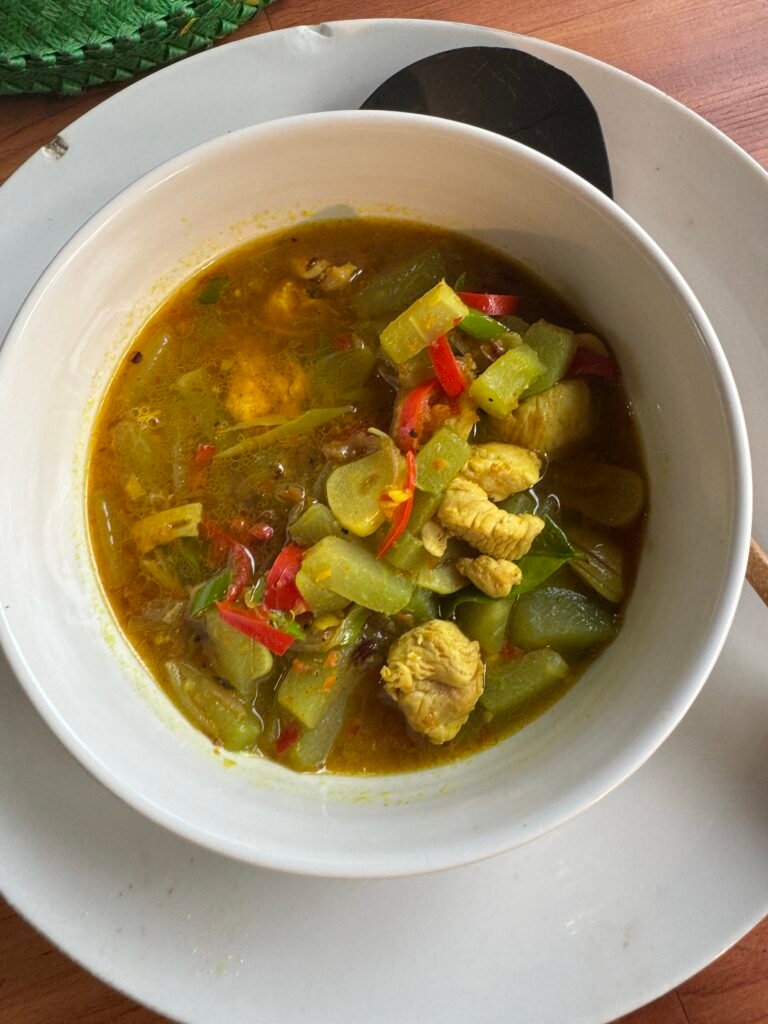
That moment has shaped the way I move through the world. But it didn’t start that way. Before my first one-way flight to China, you could’ve found me eating fried chicken tenders and ranch more times than I’d like to admit. Maybe some Americanized Mexican food thrown in but that was about it. There wasn’t much culture to my palate. And then I traveled. And I tasted something something so unbelievably good, but so unfamiliar that it stopped me in my tracks.
I remember thinking… what is this? What spices are in this? Where did they come from? Why does it taste like this here… and nowhere else? And that question, that one small moment of curiosity turned into something much bigger. Because once you start asking those questions, you don’t stop. You start learning about spice trade routes. About migration. About colonization. About the parts of history that aren’t always packaged neatly for tourists.
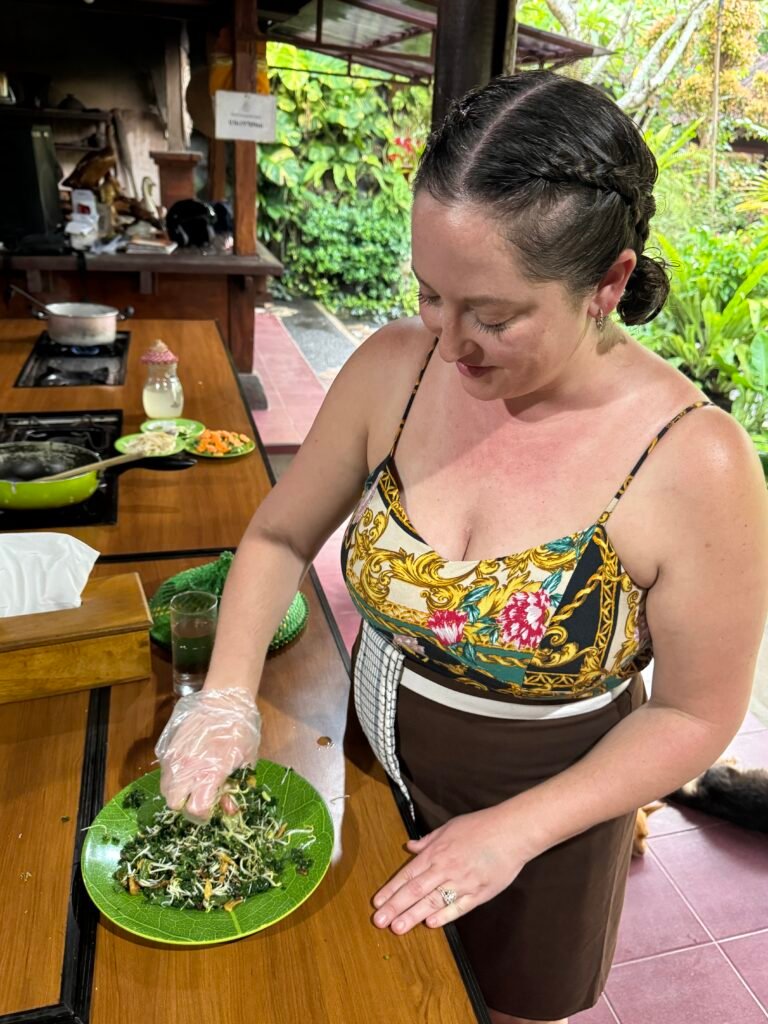
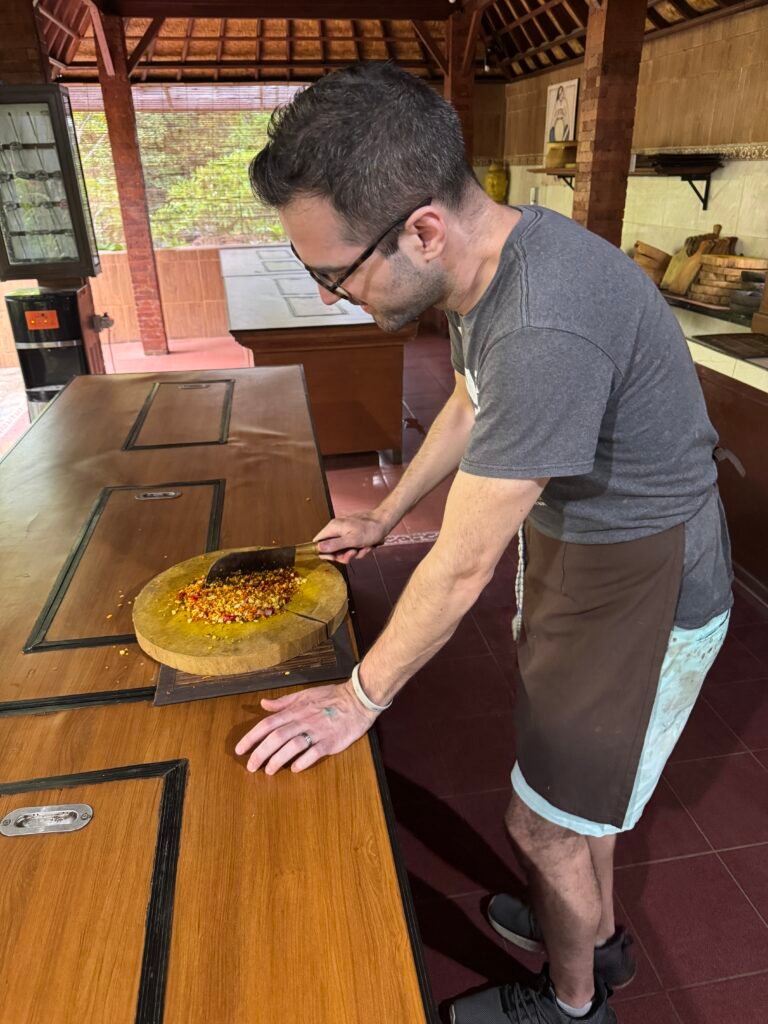
You start realizing that food isn’t just food. It’s evidence. It’s identity. It’s history sitting right in front of you on a plate. And somewhere along that path… my entire life shifted.
What to Expect from a Traditional Balinese Cooking Class
This Balinese cooking class isn’t just about food, it’s about understanding the culture behind it.
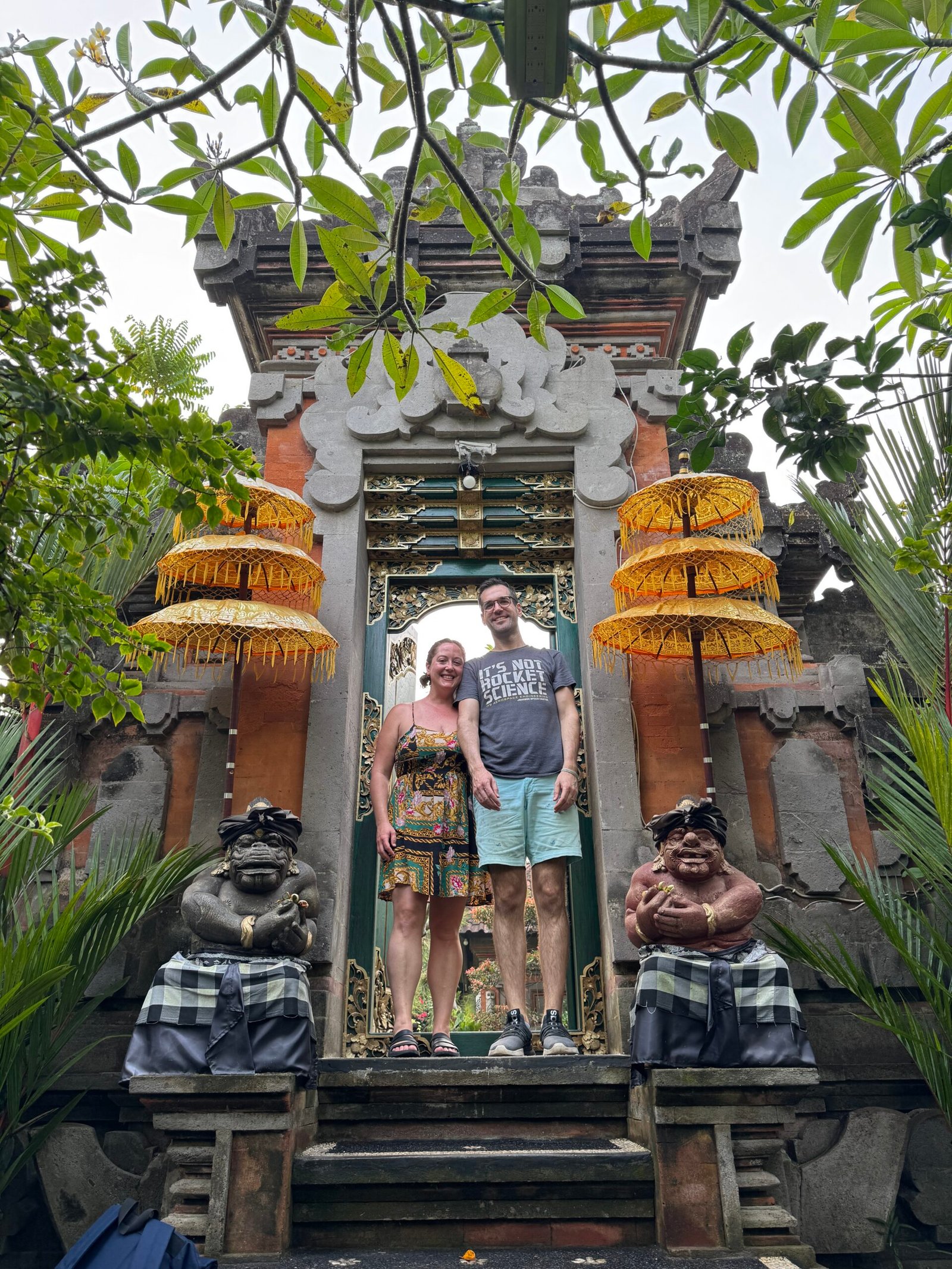
So when I found myself stepping into a traditional Balinese family compound, I already had a feeling…This wasn’t going to be just another “cooking class.” Because it never is. You don’t just arrive and start cooking.
First, you meet her. Ayu.
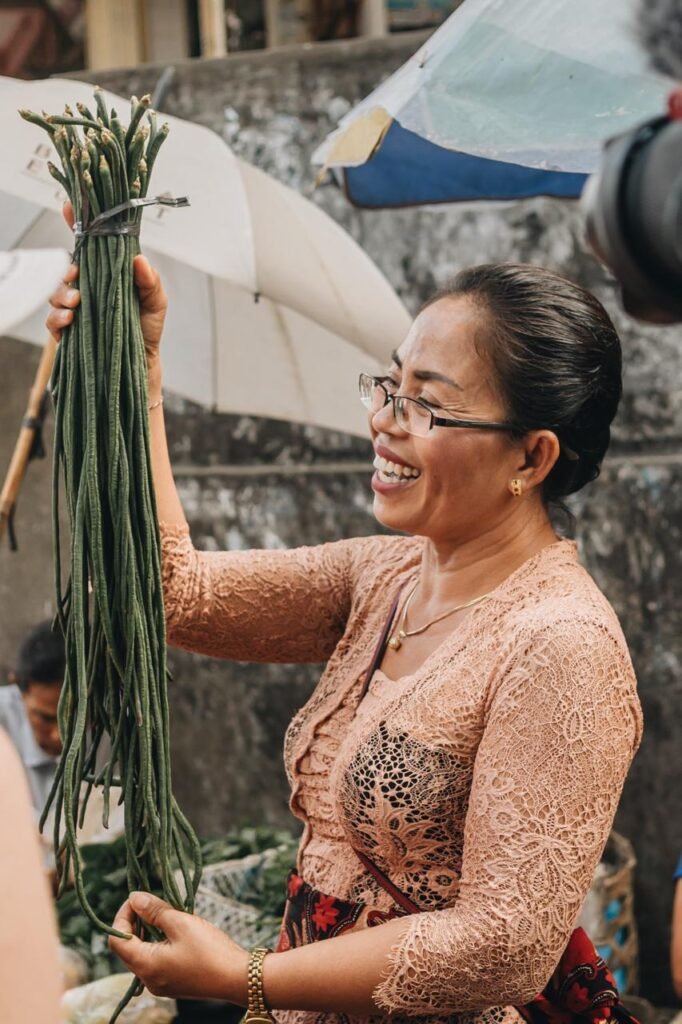
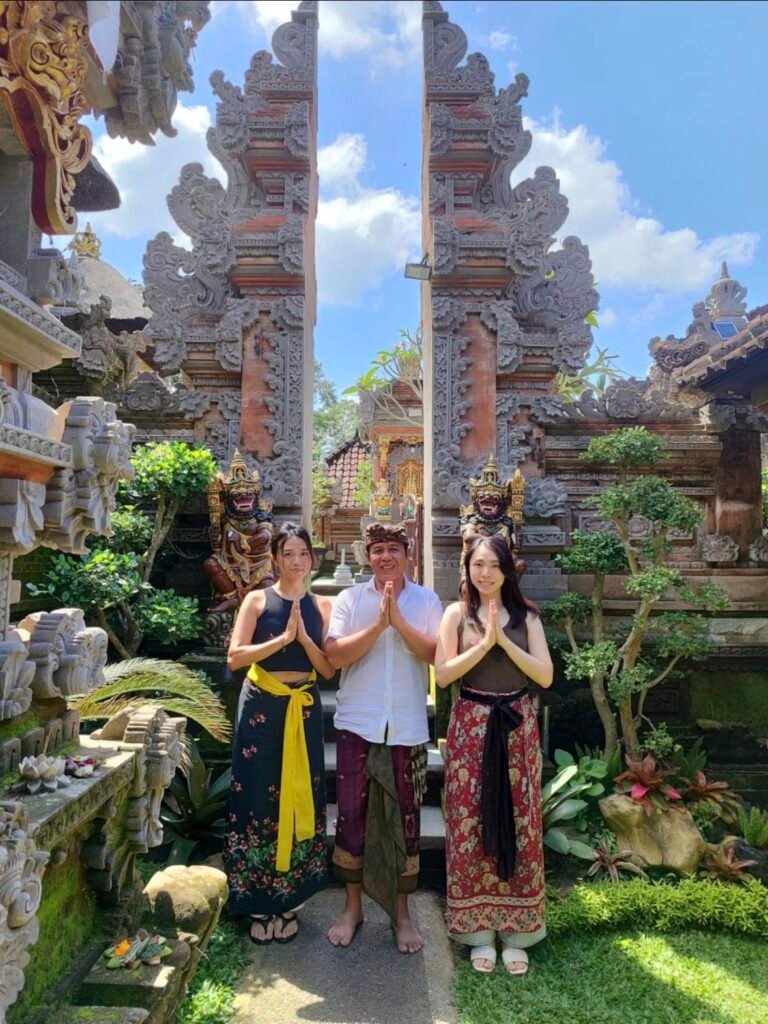
She greets you with this quiet warmth that immediately puts you at ease. Then she brings you to a nearby temple, where you sit on the traditional floor, then you slow down whether you want to or not because you suddenly feel like part of something bigger than yourself, your culture or your own traditions.
She hands you a small traditional snack and begins explaining what it is, where it comes from, why it’s eaten, how it fits into daily life. And then, slowly, without it feeling like a lesson…you start to understand. She’s dressed in traditional Balinese clothing, holding the daily offerings that women prepare each morning. She explains them, what they represent, why they matter, and you can feel it when she speaks.
This isn’t performance. This is her life. The kind of life that is so deeply rooted in tradition that it doesn’t need to be explained… but she wants you to understand it anyway. Not just see it. Understand it. By the time you arrive at her home, you’re not walking into a class. You’re being welcomed into something much deeper.
Balinese Culture: Food, Family, and Spirituality
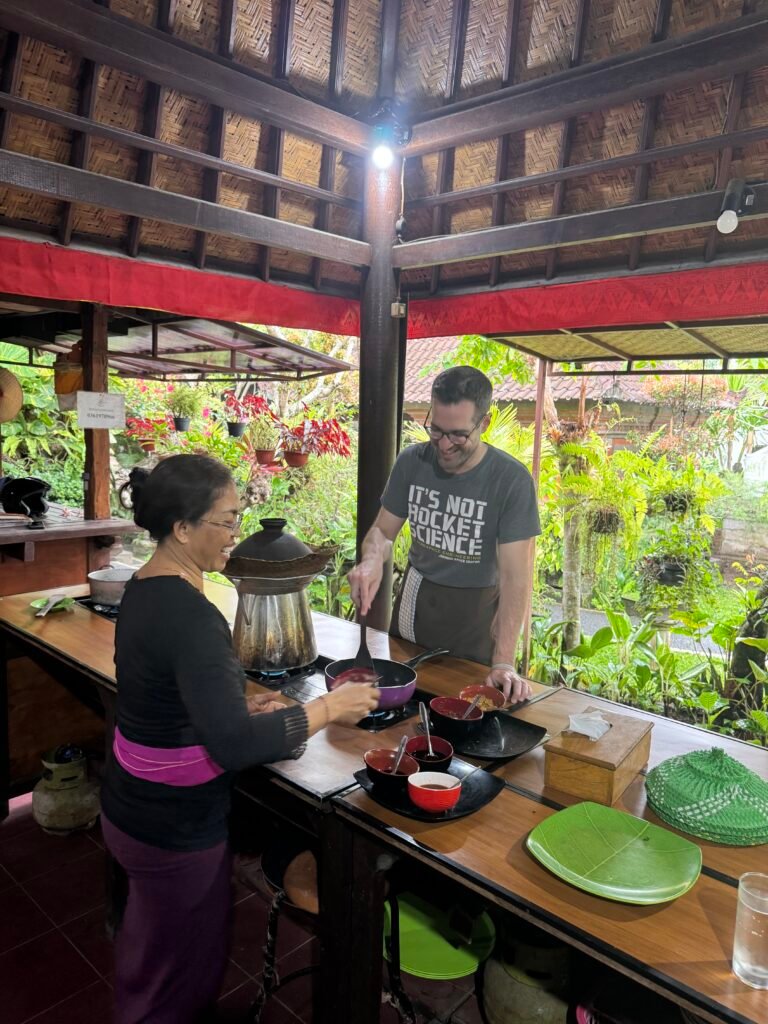
Ayu has lived here since she married into her husband’s family. In Bali, tradition still quietly dictates the rhythm of life. When a woman marries, she doesn’t just gain a partner, she becomes part of his family, his home, his lineage.
“I am from Singaraja,” she told me. “But in our tradition, when a woman marries, she moves to the husband’s home.” And just like that, her story became rooted here. But there’s another layer to this home.
Her husband, Made Lunas, is a traditional Balinese spiritual healer, you know, like the ones you’ve probably heard about in Eat Pray Love. The kind of role that feels almost mythical from the outside… until you’re sitting in the middle of it, realizing it’s just part of everyday life. “My husband became a healer because of his family,” she said. “My mother-in-law was also a healer.” It’s not something he chose, It’s something that was passed down.
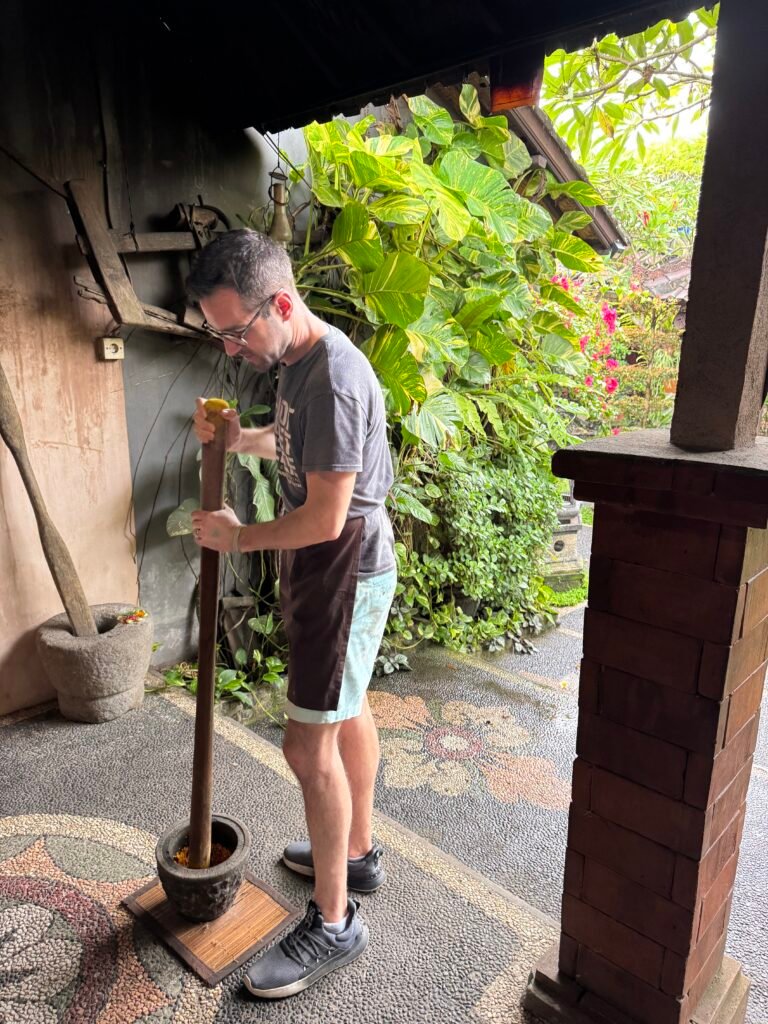
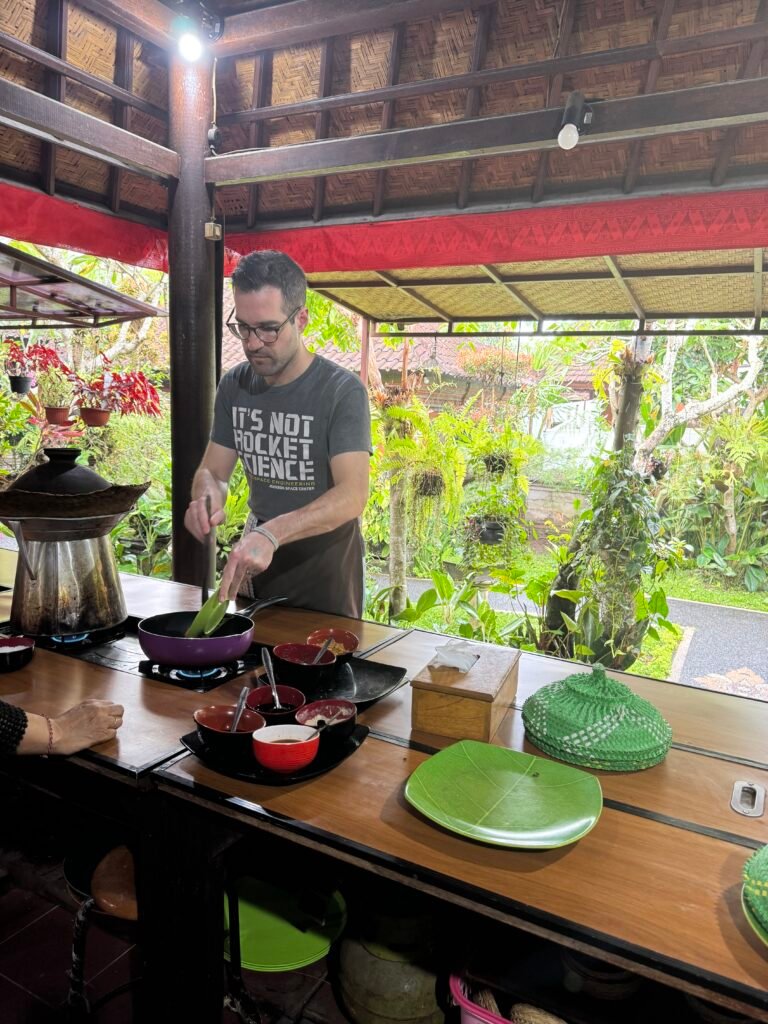
And in Bali, healing isn’t something separate from life. “People come because of anxiety… trauma… many things.”
And I know how this might sound. But I sat with him. And I may never be ready to share the details of that experience… but I can say this: It was life-changing. And humbling. Not in a loud way. In a quiet way that makes you sit with yourself a little longer than you’re used to. And what I started to understand, being there, in their home, hearing her speak, is that nothing here exists on its own.
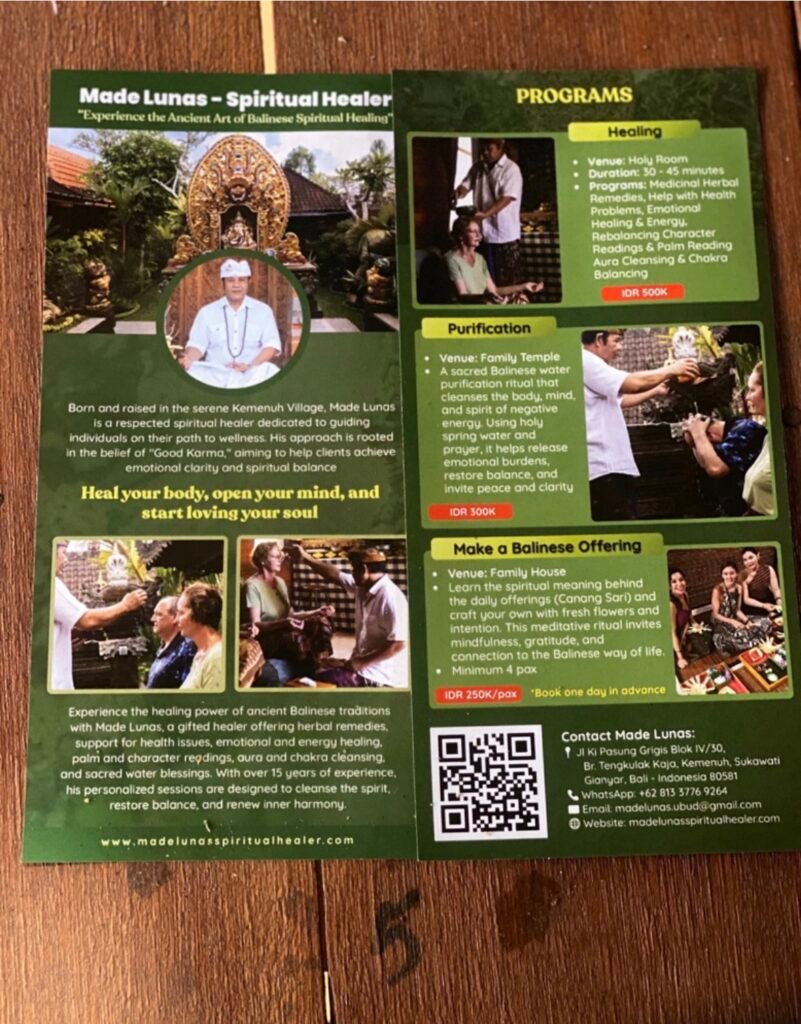
Food isn’t just food. Health isn’t just health. Spirituality isn’t something you visit when you need it. It’s all connected. The same way food is used to restore balance.
“If someone is not feeling well,” she explained, “we make food like chicken soup… not spicy… not too strong.” Because here, food doesn’t just feed you. It takes care of you. Even on the other side of the world, moms are still making chicken soup when their kids are sick… and there’s something so deeply human about that.
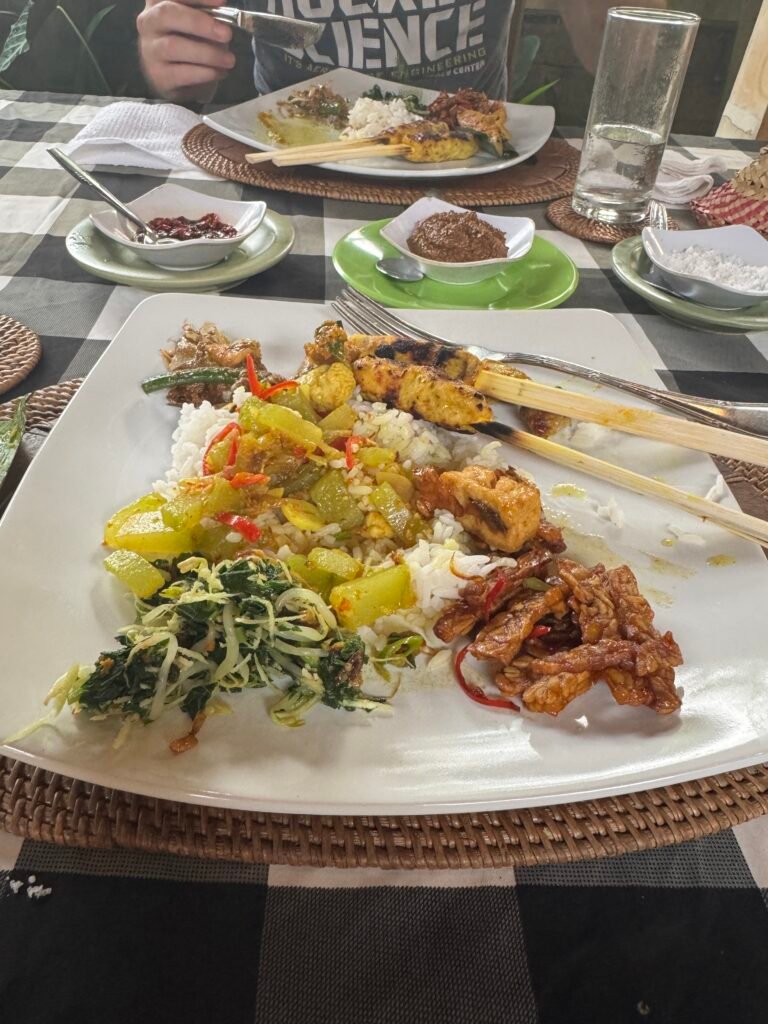
How Balinese Food Reflects Culture and Tradition
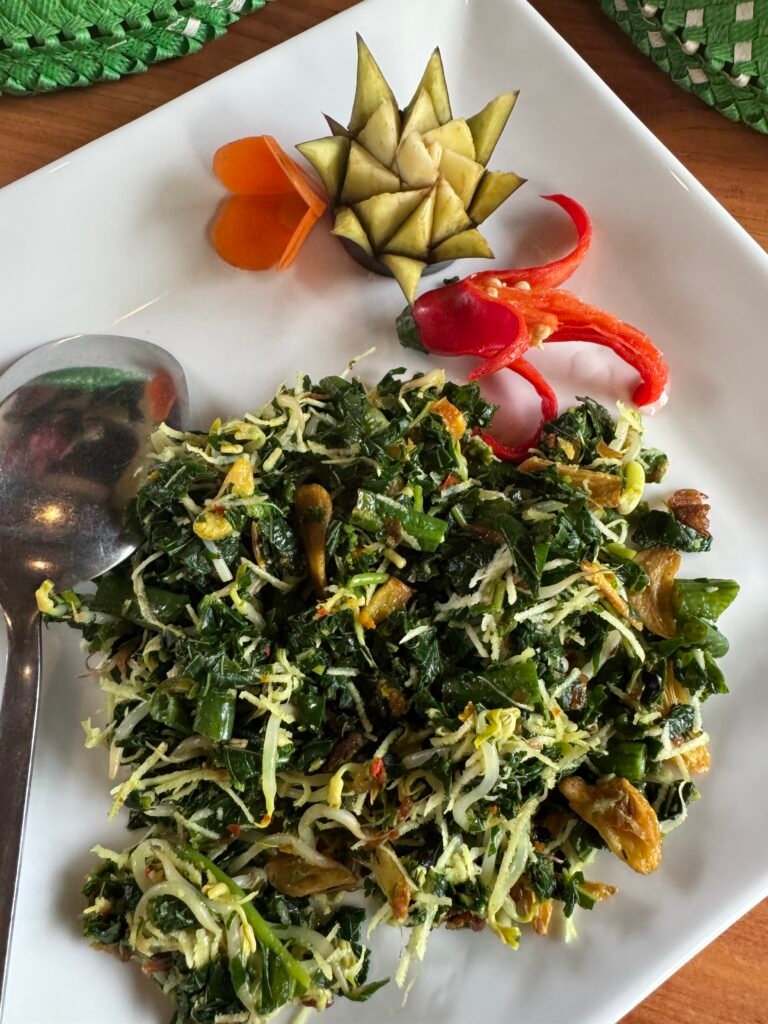
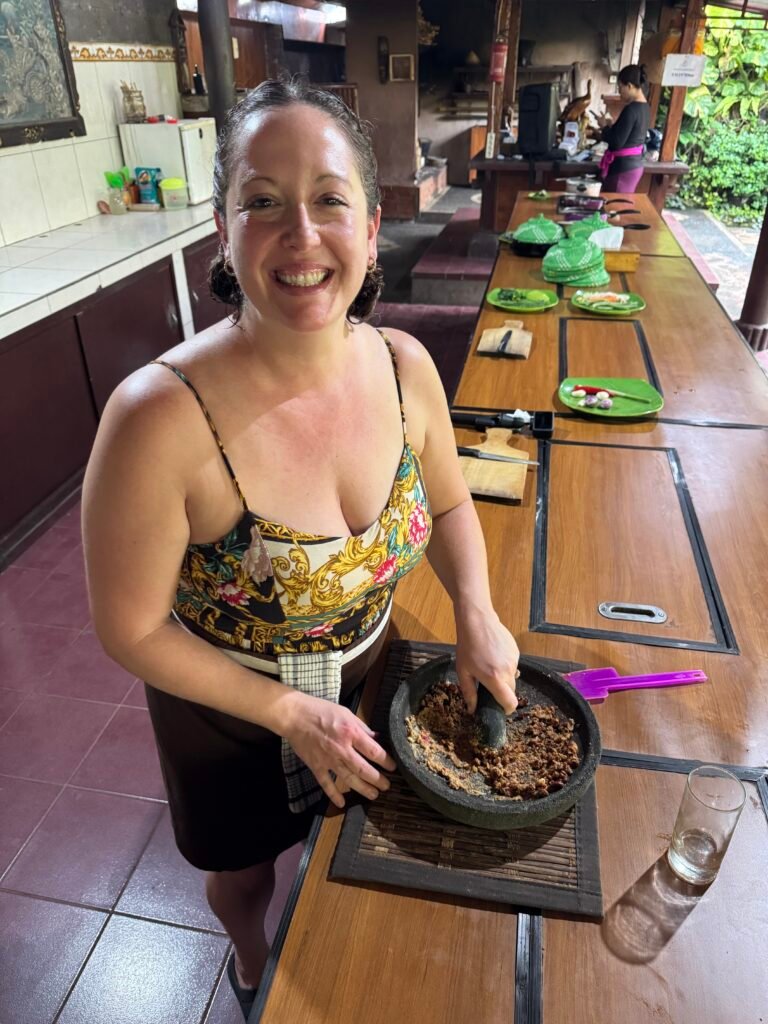
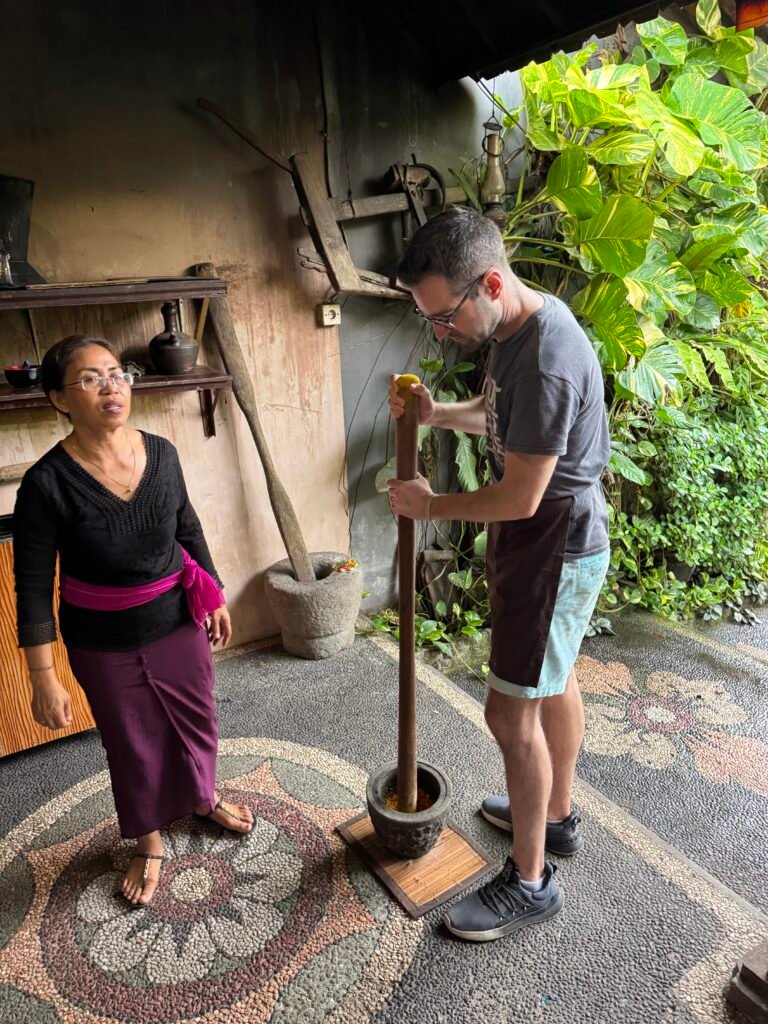
She started cooking when she was ten years old. Not because it was trendy. Not because it was a hobby. Because it was life. “My aunt taught me,” she said. “She raised me since I was three.” The first dish she ever made was pelecing. Simple. Honest. Unpretentious. I asked her about the difference between cooking for her family and cooking for guests like me.
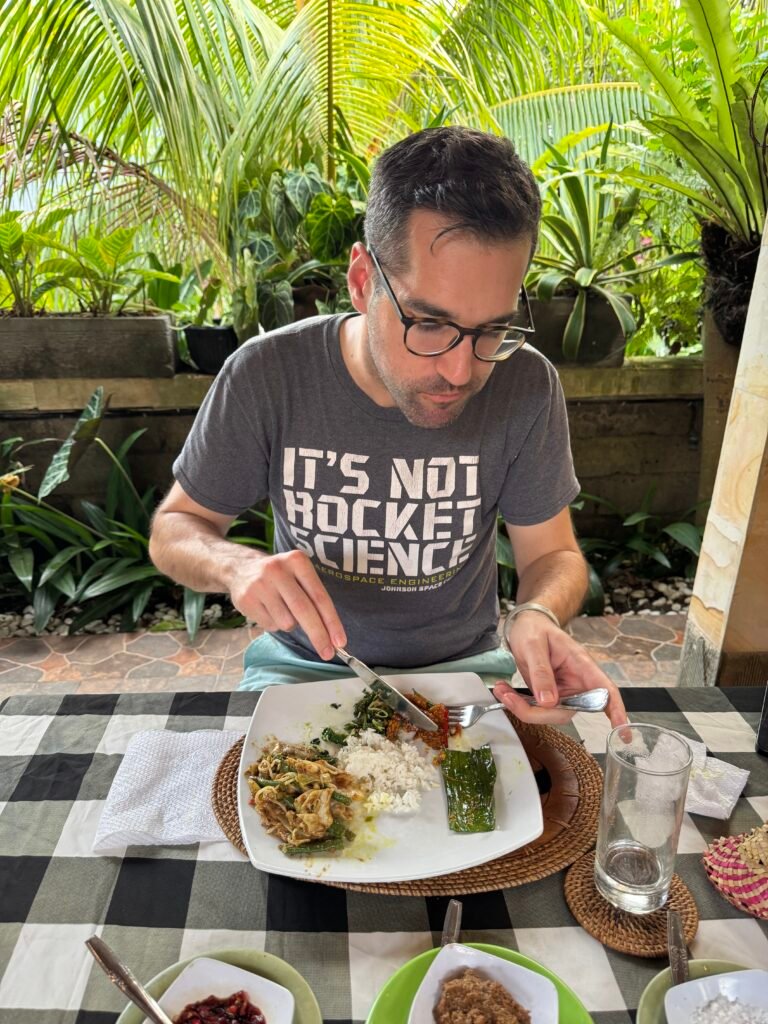
“For ourselves, the food is more spicy… stronger.” “For guests, we make it a little softer. But we still show our tradition.”
And that part stayed with me. Because the truth is… food isn’t meant to be adjusted to make us comfortable. It’s meant to be understood. And that requires something from us. Respect. Curiosity. A willingness to sit in the unfamiliar. Because the moment you start asking a place to adjust itself to you… you stop experiencing it for what it actually is. And I’ve been on both sides of that. The version of me who would’ve reached for something familiar. And the version of me now, sitting in someone’s home, eating what’s in front of me, not fully understanding it…
but wanting to.
Because that’s where the connection happens.
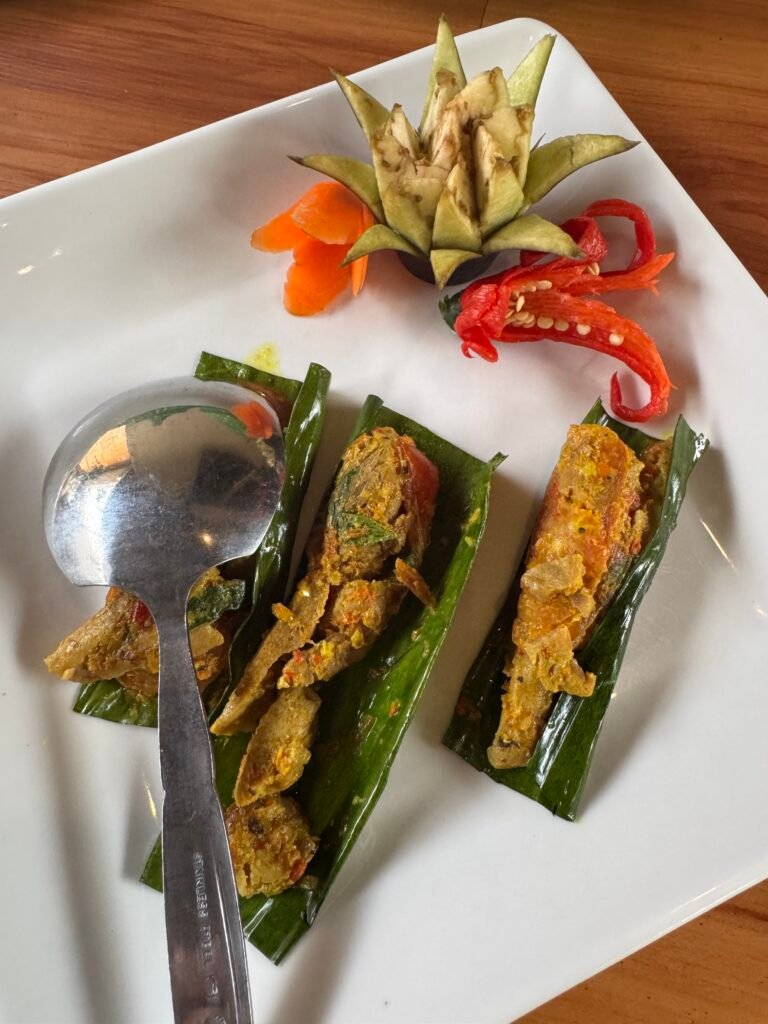
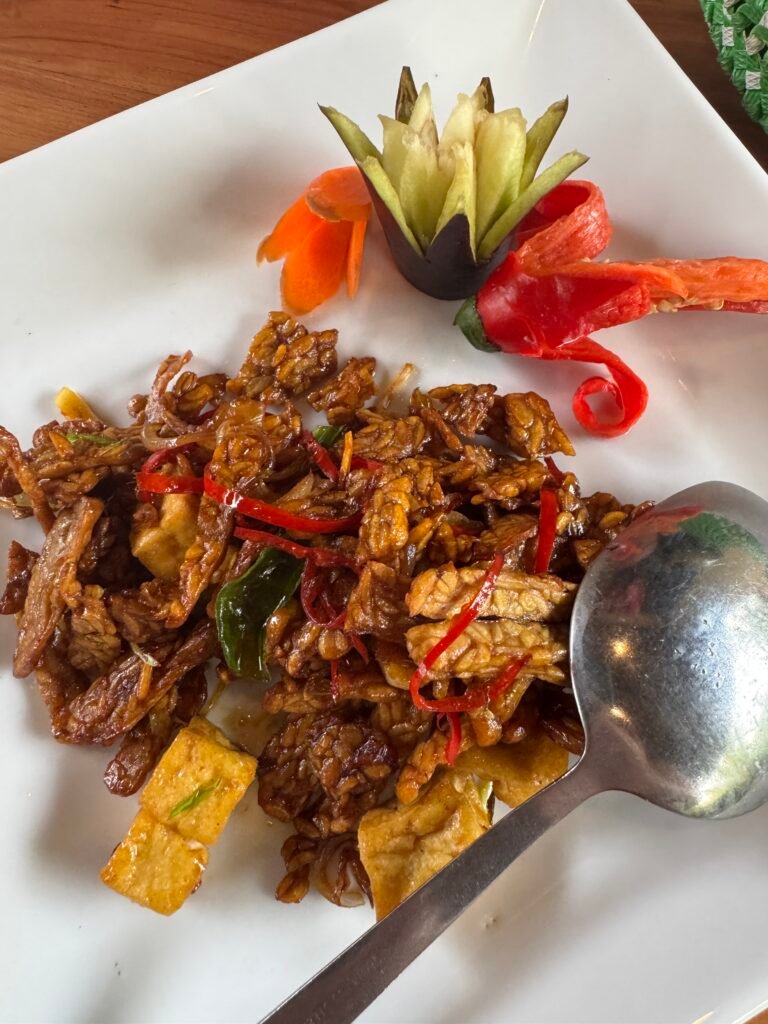
The Dish That Means Something
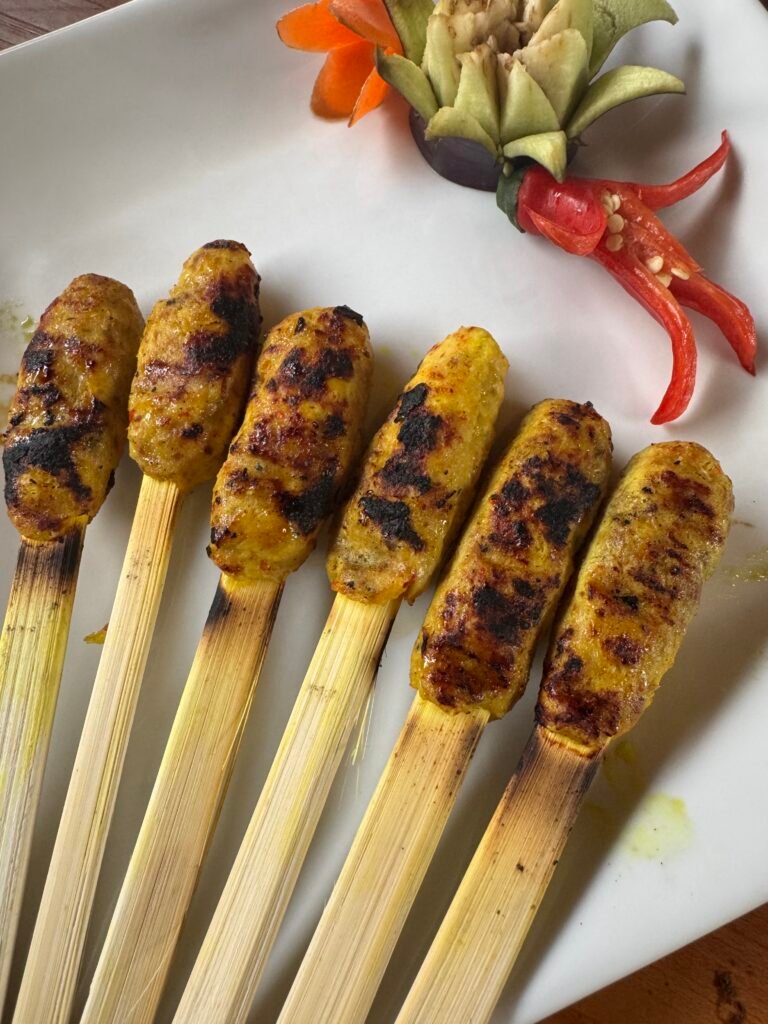
“Balinese chicken satay,” she said without hesitation. Not because it’s popular. But because it’s used in temple ceremonies… and weddings. And there it is again. Food showing up where it matters most. And the more I travel, the more I realize… this isn’t unique to Bali. Different places. Different flavors. Same meaning.
Food shows up in celebration. In grief. In gathering. In love. And somehow… that’s one of the simplest ways we’re all connected.
The Impact of Tourism in Bali
We romanticize places like Bali. And yes, it’s undeniably beautiful. But there’s always more beneath the surface.
“Tourism is very important for our life,” she told me. “If no tourists come, we have no income.”
But with that comes pressure. Too many villas being built. Rice fields disappearing. Land changing in ways that can’t always be undone. And this is the part of travel that isn’t always shown. The part where beauty and pressure exist at the same time.
And the truth is… I don’t have all the answers when it comes to traveling the “right” way.
But I do know this: Supporting the people who open their homes to you… and respecting the experience you’re stepping into… is never the wrong place to start.
Why This Balinese Cooking Class Experience Matters
Because when you strip it all back… this is what travel is actually about. Not the hotel. Not the itinerary.
The people. The ones who invite you in. The ones who share their stories. The ones who give a place its soul. Because without them… it’s just a destination.
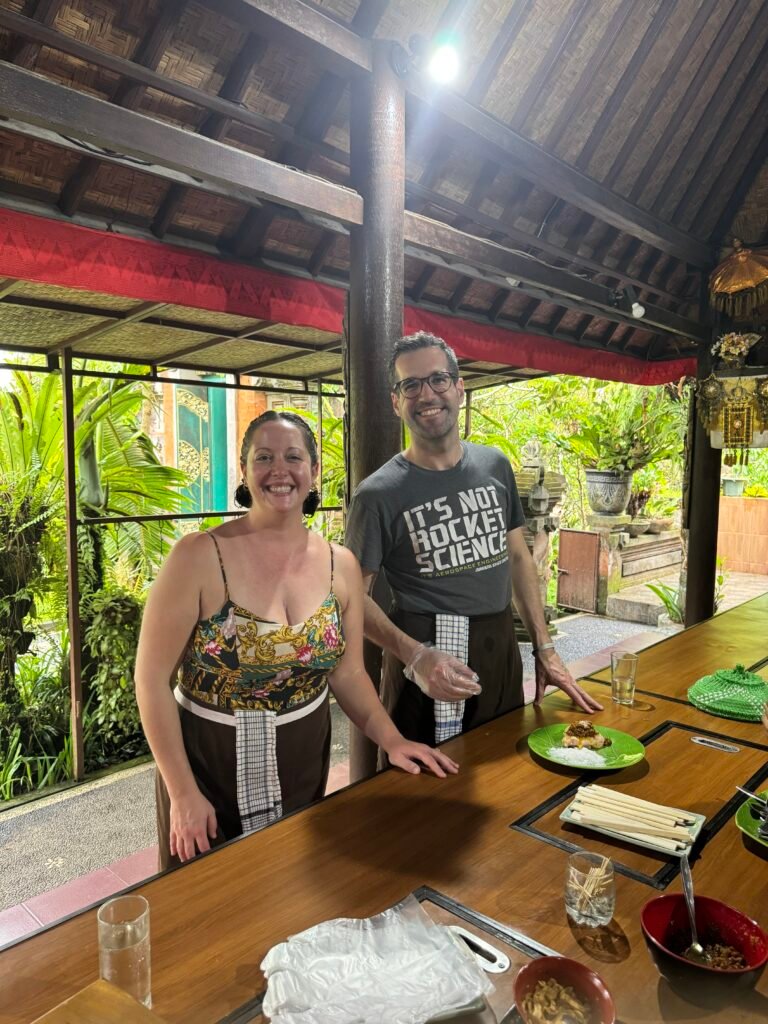
If you’re looking for an authentic Balinese cooking class in Ubud, this experience offers much more than just recipes. You’ll learn about traditional Balinese ingredients, cooking techniques, and the cultural significance behind each dish, all while being welcomed into a local family home.
And if this is the kind of travel you’re craving…the kind that feels real, personal, and rooted in the people who live it, that’s exactly what I help my clients create. Not just trips. Experiences that actually stay with you. Click here to get started on planning your trip to Bali TODAY!